Canine Parvovirus Treatment in India: A Survival Guide
Canine Parvovirus in Puppies: Symptoms, Treatment, Recovery & Prevention
Introduction: Why I Wrote This Guide
If you’ve landed on this page because your puppy is vomiting, refusing food, passing foul-smelling or bloody stools, or has just been diagnosed with Canine Parvovirus (CPV), I know how frightening this moment can be.
Over the past five years, I’ve worked professionally in the Indian pet industry, managing puppy sourcing, health verification, operations, and animal welfare. Long before that, I was simply a dog lover who spent countless hours caring for abandoned and stray dogs in my neighbourhood. Those early experiences sparked a lifelong commitment to understanding canine health and helping puppies receive the care they deserve.
Throughout my career, I’ve seen hundreds of puppies affected by Parvovirus. I’ve stayed awake through the night beside hospitalized puppies receiving IV fluids, cleaned bloody diarrhoea during emergency care, coordinated urgent veterinary treatment, and witnessed both heartbreaking losses and remarkable recoveries. Those experiences taught me that while Parvo is one of the most dangerous diseases a puppy can face, early recognition and prompt treatment can dramatically improve the chances of survival.
This guide isn’t based solely on information gathered from books or online sources. It combines real-world experience from working with puppies in India, discussions with veterinary professionals, current veterinary recommendations, and carefully researched scientific information to help pet parents understand what happens during a Parvovirus infection and what steps should be taken next.
My goal isn’t to replace your veterinarian. Instead, it’s to help you recognise the warning signs early, understand the treatment process, avoid common misconceptions, and make informed decisions while your puppy receives professional medical care.
Whether you’re trying to understand the first symptoms, preparing for treatment, supporting your puppy through recovery, or learning how to prevent Parvovirus in the future, this guide is designed to answer those questions in one place.
Quick Facts About Canine Parvovirus
| Disease | Canine Parvovirus (CPV-2) |
|---|---|
| Affected Animals | Primarily puppies and unvaccinated dogs |
| Cause | Canine Parvovirus Type 2 (CPV-2) |
| How It Spreads | Contact with infected faeces, contaminated environments, or objects carrying the virus |
| Incubation Period | Typically 3–7 days |
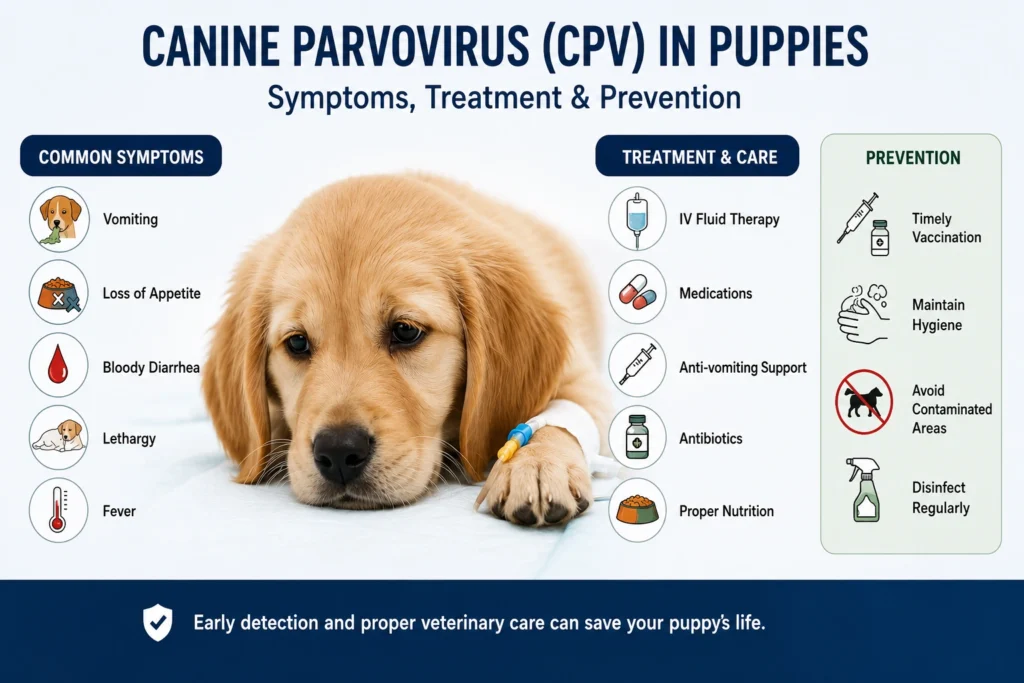
| Common Symptoms | Vomiting, lethargy, loss of appetite, foul-smelling or bloody diarrhoea, dehydration, fever |
| Treatment | Supportive veterinary care including IV fluids, antiemetics, antibiotics when indicated, nutritional support, and close monitoring |
| Can It Be Prevented? | Yes. Vaccination remains the most effective method of prevention. |
| Can Puppies Recover? | Many puppies recover when diagnosis and treatment begin early. |
Important Medical Disclaimer: This guide is intended for educational purposes only and should never replace professional veterinary advice. If your puppy is repeatedly vomiting, refusing food or water, passing bloody stools, becoming extremely weak, or showing any signs of collapse, seek immediate veterinary attention. Early treatment can make a critical difference.
What Is Canine Parvovirus (CPV)?
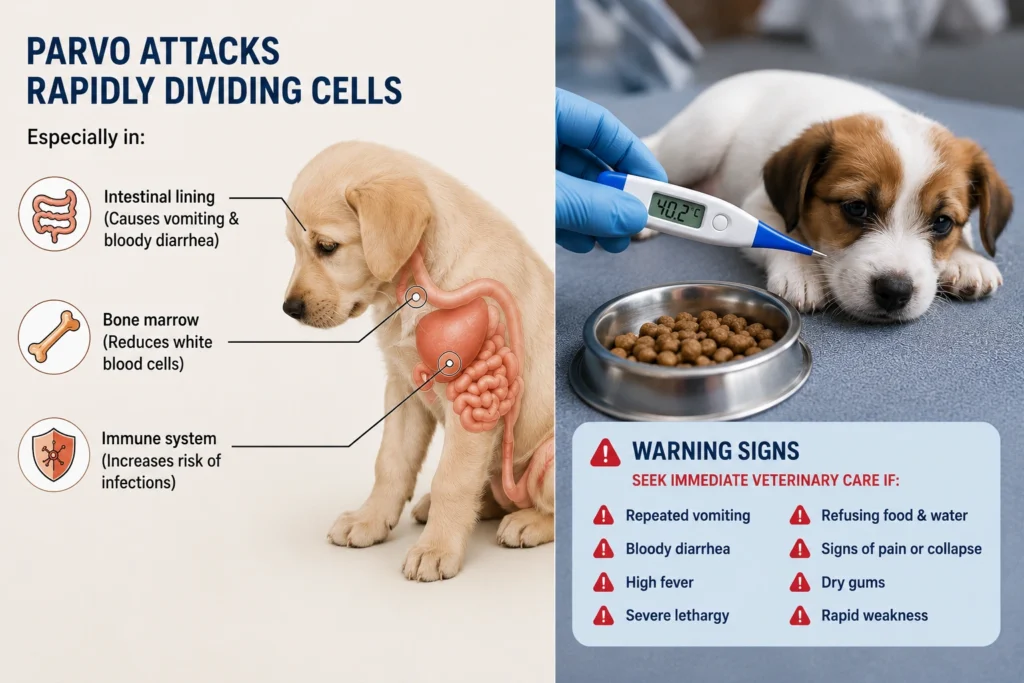
Canine Parvovirus (CPV) is one of the deadliest viral diseases affecting puppies in India. The virus primarily attacks rapidly dividing cells in the body, especially:
- Intestinal lining
- Bone marrow
- Immune system cells
What Happens Inside the Body?
| Organs Affected by Canine Parvovirus | Result |
| Intestinal lining | Severe vomiting and diarrhea |
| Bone marrow | White blood cells drop |
| Immune system | Secondary infections increase |
| Digestive tract | Bloody diarrhea and dehydration |
Without timely treatment, mortality rates can be extremely high. However, most puppies do not die directly from the virus itself.
The biggest threats are:
- Severe dehydration
- Electrolyte imbalance
- Septicemia (bloodstream infection)
- Secondary bacterial infections
- Shock
What Causes Parvo in Puppies?
How Does Parvovirus Spread?
A puppy can become infected by:
- Sniffing contaminated soil
- Walking in contaminated areas
- Contact with infected dogs
- Shared bowls or bedding
- Shoes carrying infected fecal material
Why Are Puppies in India at Higher Risk?
- Large stray dog populations
- High environmental contamination
- Crowded breeding facilities
- Incomplete vaccination schedules
The virus can survive in the environment for several months.
What Are the Early Symptoms of Parvo in Puppies?
The first symptoms usually appear suddenly. Many pet parents report that their puppy looked perfectly healthy one day and critically ill the next.
Early Warning Signs Include:
- Sudden lethargy
- Loss of appetite
- Repeated vomiting
- Foul-smelling diarrhea
- Bloody diarrhea
- Fever
- Weakness
- Refusal to drink water
Sudden Lethargy
Your puppy may:
- Sleep excessively
- Stop playing
- Become unusually quiet
- Avoid interaction
Never ignore sudden lethargy in an unvaccinated puppy.
Vomiting After Eating or Drinking
One of the earliest signs of Parvo is vomiting immediately after eating or drinking. Repeated vomiting rapidly causes dehydration.
Foul-Smelling or Bloody Diarrhea
Experienced veterinarians often recognize Parvo by the smell alone. Pet parents frequently describe the stool as:
- Rotten meat smell
- Metallic blood odor
- Decaying flesh smell
If your puppy develops bloody diarrhea, seek veterinary care immediately.
Puppy Refusing Food and Water
A puppy refusing both food and water for several hours should always be treated as an emergency.
How Is Canine Parvovirus Diagnosed in India?
Veterinarians usually diagnose Parvo using:
- Clinical symptoms.
- Physical examination.
- Fecal antigen testing.
- Blood tests.
Recommended Product
Rapid Parvo Test Kit
Rapid Parvo test kits can help detect active infection quickly, but they should not replace veterinary examination.
Can Puppies Recover From Parvo?
Yes. Persoanlly I have helped many puppies recover completely when treatment begins early.
In my experience managing Parvo cases in Indian conditions, puppies brought to a veterinarian within the first 24 hours generally have significantly better outcomes than those presented after severe dehydration develops.
Factors affecting survival include:
- Age of puppy
- Vaccination status
- Severity of dehydration
- Speed of treatment initiation
- Presence of secondary infections
What Is the Standard Canine Parvovirus Treatment in India?
There is currently no medicine that directly kills Parvovirus. Treatment focuses on supporting the puppy until its immune system defeats the virus.
IV Fluid Therapy for Puppies
IV fluid therapy is the single most important treatment.
Fluids help:
- Correct dehydration
- Restore electrolytes
- Maintain blood pressure
- Prevent shock
Most moderate to severe cases require hospitalization.
Injectable Anti-Vomiting Medications
Veterinarians often administer antiemetic injections to control vomiting. Reducing vomiting helps prevent additional fluid loss.
Antibiotics
Because Parvo damages the intestinal lining, bacteria can enter the bloodstream. Broad-spectrum antibiotics are commonly used to reduce the risk of life-threatening secondary infections.
Hyperimmune Anti-Parvo Serum
Hyperimmune Anti-Parvo Serum contains ready-made antibodies against the virus. Many Indian veterinarians use this serum as an additional supportive treatment, particularly during the early stages of disease. Clinical response varies between puppies.
Hyperimmune Anti-Parvo Serum
How Much Does Parvo Treatment Cost in India?
Treatment costs vary depending on city, hospital facilities, and disease severity.
| Treatment Type | Estimated Cost |
| OPD treatment | ₹2,000–₹6,000 |
| 24-hour hospitalization | ₹8,000–₹25,000 |
| Intensive care cases | ₹20,000–₹50,000+ |
Severe cases requiring prolonged hospitalization may cost significantly more.
Day-by-Day Parvo Recovery Timeline
Day 1–2
- Severe vomiting
- Lethargy
- Loss of appetite
- Rapid dehydration
Day 2–4
Usually the most critical period.
- Bloody diarrhea
- Continued weakness
- Intensive IV support required
Day 4–5
If treatment is working:
- Vomiting often decreases
- Puppy becomes more alert
- Tail wagging may return
Day 5–7
- Appetite gradually returns
- Stool consistency improves
- Energy levels increase
Week 2
Most surviving puppies continue improving steadily.
What Should You Feed a Puppy Recovering From Parvo?
During active vomiting, many veterinarians temporarily withhold oral food and water (known as an NPO protocol) to allow the digestive tract to rest.
The duration varies depending on the puppy’s condition. Always follow your veterinarian’s instructions. Once approved by your veterinarian, recovery diets may include:
- Prescription gastrointestinal diets
- Cerelac
- Puppy recovery formula
- Easily digestible wet food
Recommended Recovery Products
- Recovery Diet
- Puppy Probiotics
- Electrolyte Supplement
How to Prevent Parvo in Puppies
Prevention is always easier and less expensive than treatment.
Puppy Vaccination Schedule in India
| Puppy Age | Vaccine |
| 4–6 weeks* | Puppy DP (if advised) |
| 6–8 weeks | DHPP/DHLPP |
| Every 3–4 weeks | Booster doses |
| 16 weeks | Final booster |
*Always follow your veterinarian’s recommendation.
Additional Canine Parvo Virus Prevention Tips
- Avoid parks before vaccinations are complete.
- Keep puppies away from stray dogs.
- Disinfect contaminated areas thoroughly.
- Never skip vaccine boosters.
Complete Puppy Vaccination Schedule in India
What Is the Best Disinfectant for Canine Parvo Virus?
Parvo is extremely resistant in the environment. Effective disinfectants include:
- Accelerated hydrogen peroxide products
- Potassium peroxymonosulfate disinfectants
- Veterinary-grade bleach solutions
Helpful products:
- Veterinary Disinfectant
- Disposable Gloves
- Pee Pads
No. Canine Parvovirus does not infect humans.
Yes. However, vaccination dramatically reduces the risk and severity.
Under favorable conditions, the virus may survive for months.
No. Most puppies require veterinary treatment and IV fluid therapy.
Final Thoughts
After helping more than 100+ puppies fight Parvovirus, one lesson stands out. The puppies that survive are usually not the strongest puppies. They’re the puppies whose owners act quickly.
Recognize the symptoms early. Start veterinary treatment immediately. Keep the environment clean. Follow your veterinarian’s instructions carefully.
Avoid WhatsApp cures, unproven home remedies, and delays. Parvo is a race against dehydration and secondary infection. The earlier treatment begins, the better your puppy’s chances. If you suspect Parvo, don’t wait until morning. Contact a veterinarian today.