Cat Ringworm: Why It Causes Hair Loss & Bald Spots
If Your Cat Has a Bald Patch, Read This First
Finding a bald patch on your cat can be worrying. Your mind immediately jumps to questions like:
- “Is this a fungal infection?”
- “Will my other pets catch it?”
- “Will the hair grow back?”
- “Can I treat it at home?”
As a cat parent myself, I know exactly how stressful this feels. Over the years, I’ve cared for and treated hundreds of cats suffering from fungal infections, particularly ringworm. Some arrived with a tiny patch of missing fur behind the ears, while others had widespread hair loss covering large areas of their body.
During that journey, I tried countless shampoos, sprays, creams, and home remedies. Some products promised quick results but made little difference. Others worked temporarily before the infection returned.
One thing became clear very quickly:
Medication alone isn’t always enough.
The cats that recovered fastest usually received a combination of proper veterinary treatment, good hygiene, and consistent supportive care throughout their recovery.
This guide combines my real-world experience with current veterinary knowledge to help you understand:
- What ringworm actually is.
- How to recognize the early signs.
- When you should visit a veterinarian.
- What treatment usually involves.
- The supportive care routine I’ve personally found most effective after treating hundreds of cats.
FurrJournal Experience Note
This guide combines first-hand experience caring for cats with current veterinary guidance. Whenever I recommend a supportive care routine or product, I’ll clearly distinguish between veterinary treatment and the practical methods I’ve personally found helpful. Home care should always support not replace a proper veterinary diagnosis.
Quick Facts About Ringworm in Cats
| Topic | Information |
|---|---|
| Medical Name | Dermatophytosis |
| Common Name | Ringworm |
| Cause | Fungal infection |
| Most Affected | Kittens, rescue cats, long-haired cats, cats with weakened immunity |
| Contagious? | Yes, to other pets and humans |
| Emergency? | Usually no, but early treatment is important |
| Can Hair Grow Back? | Yes, in most cases after successful treatment |
| Recovery Time | Usually 4–8 weeks, depending on severity |
| Needs a Vet? | Yes, for accurate diagnosis and treatment |
What Is Ringworm in Cats?
Ringworm in cats is a contagious fungal infection that affects the skin, hair, and sometimes the nails. Despite its name, it isn’t caused by a worm. It spreads through fungal spores and often causes circular bald patches, flaky skin, and broken hairs. Most cats recover completely with appropriate veterinary treatment and supportive home care.
What Is Ringworm in Cats?
One of the biggest misconceptions I hear from pet owners is that ringworm is caused by a parasite.
It isn’t.
Ringworm is a fungal infection caused by a group of fungi known as dermatophytes, which feed on keratin the protein found in your cat’s skin, hair, and nails.
As the fungus damages the hair shafts, the hairs become weak and break off close to the skin. This creates the characteristic round or irregular bald patches many owners notice first.
Unlike some skin diseases, ringworm isn’t usually life-threatening. However, it is highly contagious and can spread:
- Between cats
- To dogs
- To other household pets
- To humans, particularly children, older individuals, or immunocompromised individuals
That’s why early diagnosis and treatment are so important.
Why Do Cats Get Ringworm?
Fungal spores are surprisingly tough. They can survive in the environment for weeks or even months under the right conditions.
A cat doesn’t have to be dirty or neglected to develop ringworm.
In fact, I’ve seen well-cared-for indoor cats develop fungal infections after bringing home a newly adopted kitten.
Some of the most common risk factors include:
Young Age
Kittens haven’t fully developed their immune systems, making them much more susceptible to fungal infections than healthy adult cats.
Rescue and Community Cats
Many rescue cats have experienced poor nutrition, stress, overcrowding, or previous illnesses, all of which can weaken the immune system and increase the risk of infection.
Multi-Cat Households
The more cats sharing bedding, scratching posts, carriers, or grooming tools, the easier it becomes for fungal spores to spread.
Warm and Humid Weather
Living in India, I’ve noticed fungal infections become more common during the monsoon season. Warm temperatures combined with high humidity create an environment where fungi thrive.
Reduced Immunity
Cats recovering from illness or suffering from chronic medical conditions may struggle to fight off fungal infections as effectively as healthy animals.
Common Symptoms of Ringworm in Cats
One of the reasons ringworm is frequently misdiagnosed is that it doesn’t always look the same. Some cats develop only a tiny bald patch. Others develop multiple lesions across the body. Here are the symptoms I see most often.
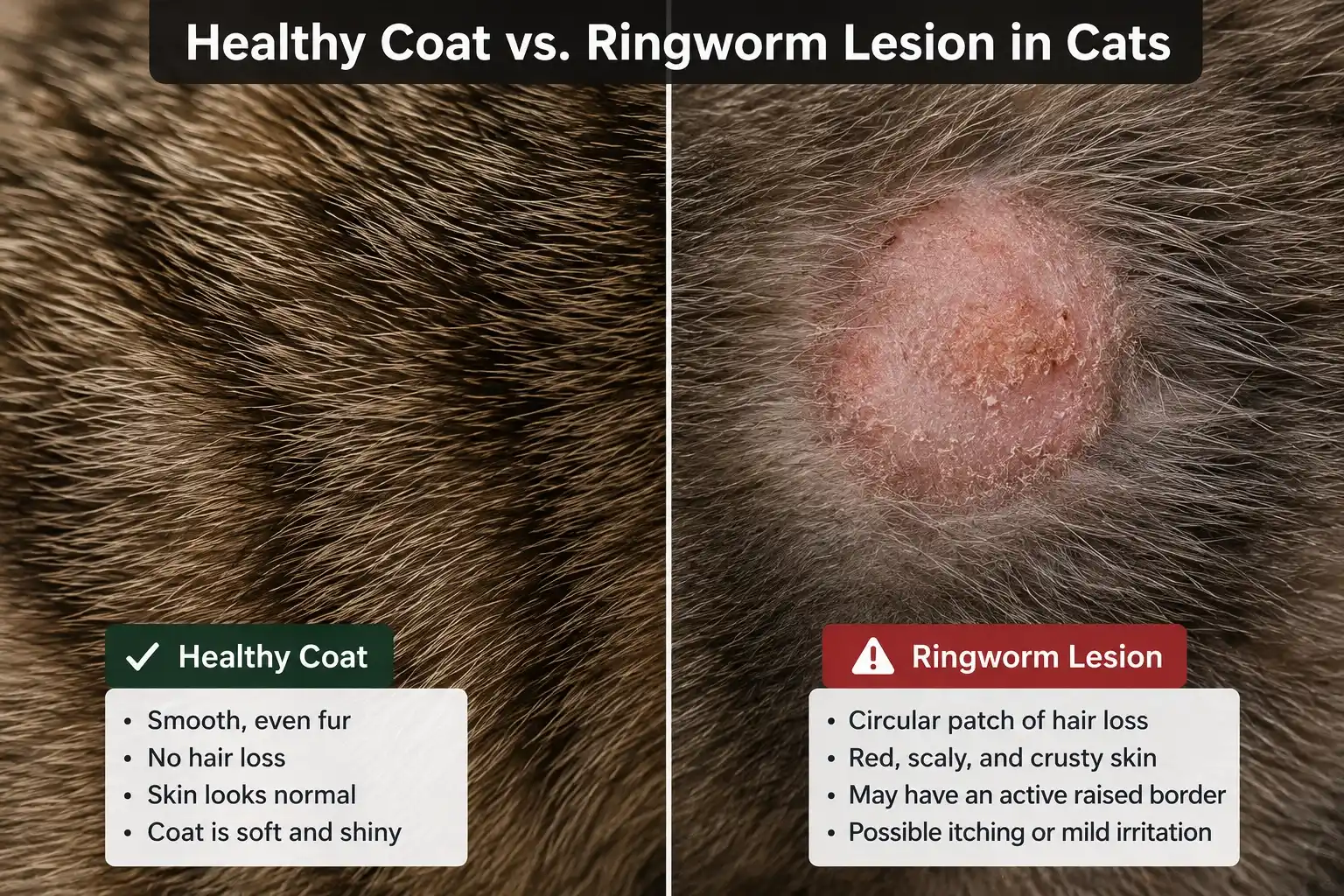
Circular Bald Patches
This is usually the first sign owners notice. Hair begins falling out in small, round areas, often around:
- The ears
- Face
- Nose
- Paws
- Legs
- Tail
As the infection progresses, these patches may gradually enlarge.
Dry, Flaky Skin
The exposed skin often appears:
- White
- Flaky
- Dry
- Slightly crusty
Many owners mistake this for dandruff.
Broken Hair
Instead of falling out naturally, infected hairs often snap close to the skin surface. This gives the affected area a rough, uneven appearance.
Mild Itching
Unlike flea allergies or mange, ringworm isn’t always intensely itchy. Some cats barely scratch at all. Others develop moderate irritation. The amount of itching varies from cat to cat.
Rough or Thickened Skin
As the infection continues, the skin may become:
- Rough
- Thickened
- Crusty
Secondary bacterial infections can make these changes more severe.
Hair Loss That Slowly Spreads
One small patch often becomes two.
Then three.
This gradual spread is something I’ve seen repeatedly over the years. It’s one of the biggest reasons I encourage owners not to “wait and see” for several weeks.
Could It Be Something Else?
Not every bald patch is ringworm. Several skin conditions can look surprisingly similar.
| Condition | Main Symptom | Contagious? |
|---|---|---|
| Ringworm | Circular hair loss | ✅ Yes |
| Ear Mites | Scratching around ears | Yes |
| Flea Allergy | Hair loss near tail | No |
| Mange | Severe itching | Depends on type |
| Food Allergy | Widespread itching | No |
This is exactly why getting the correct diagnosis matters. Treating ringworm as an allergy or an allergy as ringworm often delays recovery.
When Should You See a Veterinarian?
One of the questions I hear most often is:
“Can I wait a few days and see if it improves?”
If your cat has a tiny patch of missing fur but is otherwise eating, drinking, and behaving normally, it may not be an emergency.
However, I still recommend arranging a veterinary appointment as soon as possible. Early diagnosis usually means:
- Shorter treatment
- Less environmental contamination
- Lower risk of spreading it to other pets
- Better hair regrowth
- Reduced chance of infecting family members
Seek Veterinary Care Immediately If:
- Your kitten is very young.
- Hair loss is spreading rapidly.
- The skin is bleeding or producing pus.
- Your cat stops eating.
- Multiple pets in the house develop similar lesions.
- You or a family member develops suspicious circular skin lesions.
How Veterinarians Diagnose Ringworm
Because several skin diseases look alike, veterinarians don’t rely on appearance alone. Instead, they may use one or more diagnostic methods.
Physical Examination
Your veterinarian will examine the affected skin, hair, ears, and overall health before deciding which tests are appropriate.
Wood’s Lamp Examination
Some species of ringworm fluoresce under ultraviolet light.
However, not every fungal infection glows, so this test alone cannot confirm or rule out ringworm.
Fungal Culture
A fungal culture remains one of the most reliable ways to confirm a dermatophyte infection.
Although it takes longer than other tests, it helps identify the specific fungus involved.
Microscopic Examination
Hair samples or skin debris may be examined under a microscope to look for fungal spores or other abnormalities.
Before You Start Treatment
One lesson I’ve learned after treating hundreds of cats is this: Don’t focus only on killing the fungus. You also need to think about:
- Preventing the infection from spreading.
- Supporting damaged skin while it heals.
- Keeping the environment clean.
- Completing the full treatment, even after the skin starts looking better.
These simple steps often make the difference between a smooth recovery and a frustrating cycle of reinfection.
What I’ve Learned After Treating Hundreds of Cats
This isn’t something I learned from a textbook. It’s something I noticed after treating fungal infections over and over again. The cats that recovered the fastest usually weren’t the ones using the most expensive products.
They were the ones whose owners stayed consistent. The owners who got the best results usually:
- Started treatment early.
- Finished the full treatment even after the skin looked better.
- Cleaned bedding and blankets regularly.
- Isolated infected cats when necessary.
- Focused on healing the skin not just killing the fungus.
The biggest mistakes I see are waiting too long, stopping treatment early, or constantly switching between products hoping for faster results. Ringworm requires patience. Consistency almost always beats shortcuts.
My 3-Step Supportive Care Routine
Important: This routine is based on my personal experience caring for cats with confirmed fungal infections. It is intended to support veterinary treatment, not replace it.
Over the years, I’ve experimented with many products marketed for fungal skin problems. Some worked reasonably well.
Others didn’t live up to their claims.
Eventually, I settled on a simple three-step routine that has consistently given me the best results when used alongside the treatment recommended by a veterinarian.
Step 1: Lime Sulfur Dip (The Product I Trust the Most)
If I had to choose one supportive product that has impressed me the most over the years, it would be Lime Sulfur Dip.
I’ve tried antifungal shampoos, sprays, powders, and various home remedies. While some offered temporary improvement, Lime Sulfur Dip consistently delivered better results in cats with confirmed fungal infections when used correctly as part of a veterinarian-directed treatment plan.
Why I Continue Using It
In my experience, Lime Sulfur Dip:
- Helps reduce fungal spores on the coat.
- Supports veterinary treatment.
- May help reduce contamination of the environment.
- Is suitable for treating large areas of the body where creams aren’t practical.
Another advantage is that it reaches places creams often can’t, especially in long-haired cats.
The Downsides
I’ll be honest it’s not a perfect product.
Owners should know about its disadvantages before using it.
- It has a strong sulfur smell.
- It can temporarily stain light-colored fur yellow.
- Some cats dislike the bathing process.
- It must be applied carefully according to the product instructions.
Many people stop using it because of the smell.
Personally, I think that’s a mistake.
If a product consistently supports recovery, I can tolerate a temporary smell much more easily than weeks of recurring infection.
Step 2: Virgin Coconut Oil
This is probably the product I’m asked about the most. Can coconut oil cure fungal infections?
No. And I never use it expecting it to. Instead, I use virgin coconut oil for an entirely different reason. Once the infection starts improving, many cats are left with dry, flaky, rough skin where the hair has fallen out.
This is where I’ve consistently found virgin coconut oil helpful.
Why I Use It
A very small amount applied to healed, non-open areas may help:
- Moisturize dry skin.
- Improve skin comfort.
- Support the skin’s natural barrier.
- Create a healthier environment for hair to grow back after the infection has been controlled.
Think of it as skin support, not antifungal treatment.
When I Don’t Use It
I avoid applying coconut oil:
- On open wounds.
- On areas with pus or active discharge.
- Before a veterinarian has confirmed the diagnosis.
Good supportive care should never interfere with proper medical treatment.
Step 3: Veterinary Spot-On Treatment
Many cats with fungal infections also have fleas or mites.
While these parasites don’t cause ringworm, they can make skin irritation worse and increase scratching, slowing the healing process.
For that reason, I usually recommend discussing a veterinary-approved spot-on treatment with your veterinarian, especially if parasites are suspected.
Why I Like It
It helps:
- Control fleas.
- Manage certain external parasites.
- Reduce unnecessary scratching.
- Lower the chance of reinfestation.
One important reminder:
Never use a dog spot-on product on a cat.
Some ingredients that are safe for dogs can be extremely dangerous—even fatal for cats.
Always use a product specifically labeled for feline use and appropriate for your cat’s age and weight.
Products I Personally Trust
These aren’t products I recommend because they’re popular.
They’re products I’ve continued using because they’ve consistently supported recovery when combined with proper veterinary treatment.
| Product | Why I Use It | Things to Know |
|---|---|---|
| Lime Sulfur Dip | My preferred supportive product for confirmed fungal infections. | Strong odor and temporary yellow staining are normal. |
| Virgin Coconut Oil | Helps moisturize recovering skin and supports healthier hair regrowth after the infection improves. | Not an antifungal treatment. Avoid open wounds. |
| Veterinary Spot-On Treatment | Helps manage fleas and mites that may complicate recovery. | Always choose a cat-specific product recommended by your veterinarian. |
Common Mistakes I See Cat Owners Make
Most treatment failures I’ve seen weren’t caused by the fungus. They were caused by simple mistakes.
Waiting Too Long
A tiny bald patch often becomes multiple lesions within a few weeks. Early treatment is almost always easier.
Stopping Treatment Too Soon
Just because the skin looks better doesn’t mean the fungus has been completely eliminated. Always complete the treatment plan recommended by your veterinarian.
Forgetting the Environment
Spores don’t only live on your cat. They can remain on:
- Bedding
- Blankets
- Brushes
- Carriers
- Furniture
Cleaning these items is an important part of preventing reinfection.
Trying Multiple Home Remedies
Changing products every few days usually delays recovery. Choose an appropriate treatment plan with your veterinarian and stick with it unless advised otherwise.
Recovery Timeline
Every cat heals differently, but this is the general pattern I’ve observed.
| Recovery Stage | What You May Notice |
|---|---|
| Week 1 | Treatment begins and new lesions usually stop appearing. |
| Week 2–3 | Scaling and irritation gradually improve. |
| Week 4–6 | New hair begins growing over bald patches. |
| Week 6–8 | Coat continues becoming thicker and healthier. |
| Beyond 8 Weeks | Severe or widespread infections may require additional treatment and follow-up. |
Patience is important. Hair almost always grows back more slowly than the infection clears.
How to Prevent Ringworm in Cats
Although ringworm isn’t always preventable, you can reduce the risk by:
- Isolating infected cats until your veterinarian advises otherwise.
- Washing bedding regularly.
- Cleaning carriers, brushes, and grooming tools.
- Quarantining newly adopted cats before introducing them to other pets.
- Feeding a complete, balanced diet.
- Scheduling routine veterinary check-ups.
- Maintaining good hygiene, especially in multi-cat households.
Frequently Asked Questions
Yes. Ringworm is a zoonotic infection, meaning it can spread from animals to people. Good hygiene and prompt treatment reduce the risk.
In most cases, yes. Once the fungal infection is under control, the hair usually regrows over the following weeks or months.
Yes. Fungal spores can enter the home on shoes, clothing, carriers, or newly adopted pets.
No. I use virgin coconut oil only to support skin recovery after the infection starts improving not to treat the fungal infection itself.
When used according to the product instructions and your veterinarian’s guidance, Lime Sulfur Dip is widely used as part of ringworm management. Avoid contact with the eyes and mouth.
Most cases improve within four to eight weeks, although severe infections may take longer.
If your veterinarian confirms ringworm, temporary isolation may help reduce transmission to other pets until treatment is underway.
Yes. Reinfection is possible if treatment isn’t completed or if contaminated bedding, grooming tools, or the environment aren’t cleaned properly.
Key Takeaways
- Ringworm is a fungal infection not a worm.
- Early diagnosis usually leads to faster recovery.
- Veterinary treatment is the foundation of successful management.
- Lime Sulfur Dip has consistently been the most reliable supportive product in my experience.
- Virgin coconut oil can support healing skin but is not an antifungal treatment.
- Cleaning your cat’s environment is just as important as treating the infection itself.
- Patience and consistency usually produce the best long-term results.
What I’d Do If This Were My Own Cat
If this were my own cat, I wouldn’t waste time trying five different shampoos hoping one of them would magically solve the problem.
I’d book a veterinary appointment to confirm that it really is ringworm.
Once the diagnosis was confirmed, I’d follow the prescribed treatment plan, keep the environment as clean as possible, and stay consistent.
Personally, I’d include a Lime Sulfur Dip as part of the supportive care routine because it’s the product I’ve trusted the most over the years. Once the infection started improving, I’d use a small amount of virgin coconut oil on healed, dry areas to support the skin while the coat grows back. I’d also make sure my cat was protected against fleas and mites if my veterinarian felt parasite control was necessary.
Most importantly, I’d remind myself that recovery takes time.
Hair doesn’t grow back overnight, and stopping treatment too early is one of the easiest ways to end up dealing with the same problem again.
In my experience, the cats that recover best aren’t the ones with the most expensive products they’re the ones whose owners stay patient, stay consistent, and work closely with their veterinarian until the infection is truly gone.
