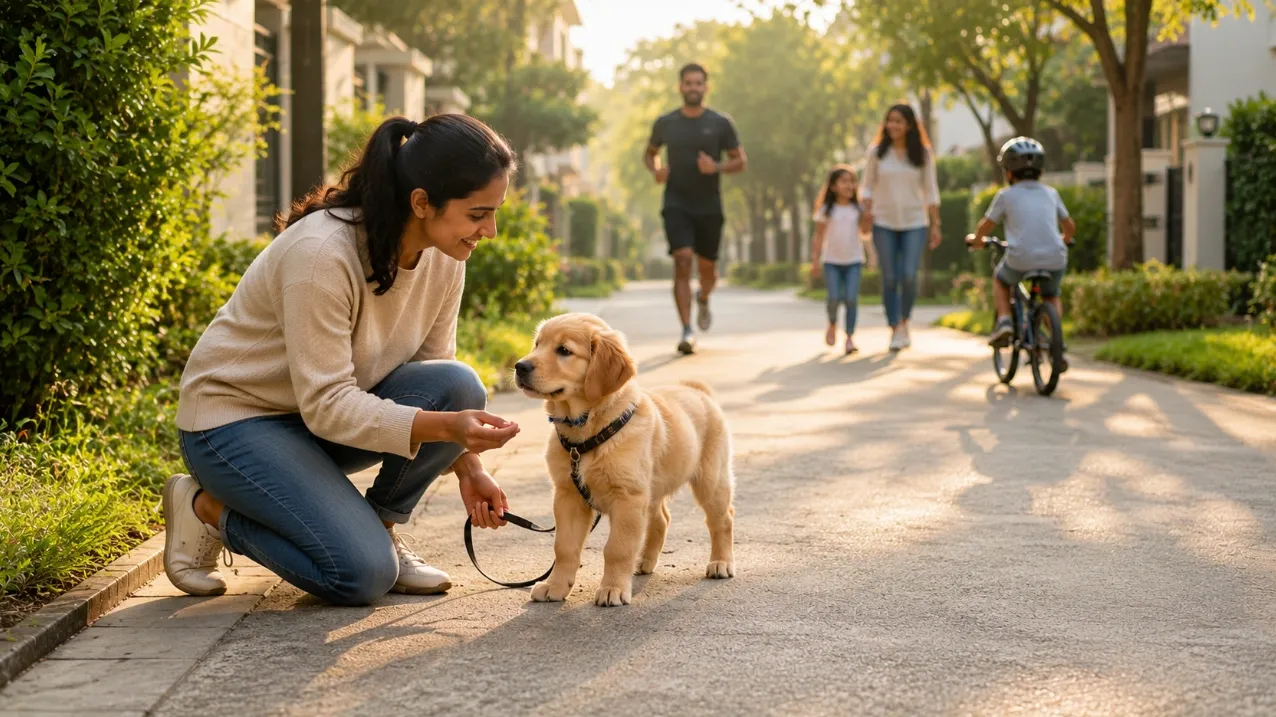
Puppy Socialization Guide: How to Raise a Confident & Friendly Dog
A well-socialized puppy is more likely to grow into a confident, friendly, and adaptable adult dog. Socialization isn’t simply about meeting other dogs, it’s about helping your puppy experience the world in a safe, positive, and controlled way. Many behaviour problems that owners face later in life, such as fearfulness, excessive barking, anxiety, or aggression, can often be influenced by a puppy’s early experiences. While genetics, health, and training also play important roles, thoughtful socialization gives your puppy the opportunity to build confidence instead of fear. The goal isn’t to overwhelm your puppy with new experiences. It’s to introduce people, places, sounds, and objects gradually while allowing your puppy to feel safe.
In this guide, you’ll learn how to socialize your puppy responsibly, when to begin, what to introduce, and the common mistakes to avoid.
What Is Puppy Socialization?
Socialization is the process of helping your puppy become comfortable with everyday life.
This includes learning to remain calm around:
- Different people.
- Household noises.
- New environments.
- Everyday objects.
- Different floor surfaces.
- Other animals (when safe).
- Vehicle sounds.
- Grooming and handling.
Every positive experience teaches your puppy that new things aren’t automatically something to fear.
When Should Socialization Begin?
Socialization begins as soon as your puppy comes home. Even before your veterinarian advises visiting public dog areas, you can safely expose your puppy to many experiences inside your home and in other low-risk environments. Early experiences often have a lasting impact, so don’t wait until your puppy is several months old to begin gentle socialization.
Start Inside the Home
Your home provides plenty of safe learning opportunities.
Introduce your puppy to:
- Doorbells.
- Vacuum cleaners.
- Television sounds.
- Kitchen noises.
- Washing machines.
- Different rooms.
- Tiles, rugs, wooden floors, and carpets.
- Umbrellas, hats, and everyday household items.
Allow your puppy to explore at its own pace. Never force interaction.
Meeting New People
Encourage your puppy to meet a variety of people in calm settings.
Examples include:
- Adults.
- Children who know how to behave gently around dogs.
- People wearing hats.
- People with glasses.
- Visitors carrying bags or umbrellas.
Ask visitors to allow the puppy to approach voluntarily instead of immediately reaching out to pet it. Positive first impressions help build confidence.
Safe Socialization Before Vaccinations Are Complete
Many owners think they must postpone all socialization until vaccinations are finished. That’s not necessary. What should be delayed is unnecessary exposure to areas where infectious diseases may be present.
Until your veterinarian confirms your puppy has adequate protection:
- Avoid dog parks.
- Avoid busy public footpaths used by many dogs.
- Avoid unknown dogs with uncertain vaccination histories.
Instead, focus on:
- Home-based experiences.
- Trusted visitors.
- Car rides.
- Watching the outside world from a safe location.
- Gentle handling exercises.
This approach balances behavioural development with disease prevention.
Introduce Everyday Sounds
Unexpected noises can frighten puppies if they’ve never heard them before.
Gradually expose your puppy to:
- Doorbells.
- Traffic sounds.
- Thunder recordings at low volume.
- Household appliances.
- Music.
- Children playing.
Keep the experience calm and reward relaxed behaviour.
Introduce Different Surfaces
Walking confidently on different textures is another important part of socialization.
Allow your puppy to explore:
- Grass.
- Wooden flooring.
- Tiles.
- Carpets.
- Mats.
- Concrete (once it’s safe to go outdoors).
Always ensure surfaces are safe and comfortable.
Gentle Handling Builds Confidence
Your puppy should become comfortable being touched.
Practice gently handling:
- Paws.
- Ears.
- Mouth.
- Tail.
- Neck.
- Belly.
These exercises make grooming, nail trimming, veterinary examinations, and daily care much easier later in life. Reward calm behaviour throughout the process.
Socializing With Other Dogs
Meeting other dogs can be valuable, but timing matters. Before your puppy has adequate vaccination protection, avoid interactions with unfamiliar dogs in public places.
Once your veterinarian confirms it’s safe, choose:
- Calm, friendly, vaccinated dogs.
- Controlled introductions.
- Short positive interactions.
Quality is more important than quantity.
Let Your Puppy Observe the World
Socialization doesn’t always require direct interaction. Sometimes simply watching the environment calmly is enough.
For example, your puppy can safely observe:
- Passing bicycles.
- Cars.
- Joggers.
- Birds.
- Everyday street activity.
Observation helps build familiarity without creating unnecessary pressure.
Common Socialization Mistakes
Avoid these common errors:
- Forcing interactions.
- Exposing your puppy to overwhelming situations.
- Visiting dog parks too early.
- Ignoring fearful body language.
- Expecting instant confidence.
- Punishing fear-based behaviour.
Always allow your puppy to progress at its own pace.
From Mukul’s Experience
One thing I’ve consistently noticed is that puppies who are gently introduced to everyday life usually adapt much more easily as they grow. I encourage owners to let their puppy experience different sounds, surfaces, people, and household routines from the very beginning. At the same time, I avoid taking young puppies to public dog areas until they’ve received adequate vaccination protection. In my experience, balancing safe socialization with disease prevention gives puppies the best possible start.
Quick Socialization Checklist
- Introduce new experiences gradually.
- Let your puppy approach people voluntarily.
- Practice gentle daily handling.
- Introduce household sounds.
- Explore different safe surfaces.
- Delay public dog parks until your veterinarian advises it’s safe.
- Reward calm curiosity.
- Never force interactions.
Frequently Asked Questions
Puppy socialization is the process of introducing your puppy to people, environments, sounds, animals, and everyday experiences in a positive and controlled way.
Begin as soon as your puppy comes home by introducing safe experiences indoors and in low-risk environments.
Yes. Focus on safe home-based experiences, trusted visitors, and controlled environments while avoiding high-risk public dog areas until your veterinarian says it’s safe.
Yes, but only when it’s safe. Choose calm, vaccinated dogs and controlled introductions rather than crowded dog parks.
Don’t force interaction. Give your puppy time, reward calm behaviour, and introduce new experiences gradually.
Lack of appropriate socialization can contribute to fear-related behavioural problems in some dogs, although genetics, health, and training also influence behaviour.
Keep them short, positive, and end before your puppy becomes tired or overwhelmed.
Yes, provided interactions are supervised and children understand how to behave gently and respectfully around puppies.
No. Positive exposure to new experiences should continue throughout your dog’s life.
Trying to expose a puppy to too many experiences at once. Confidence develops through gradual, positive experiences, not overwhelming ones.
Key Takeaways
- Socialization is about helping your puppy feel confident in everyday situations.
- Begin safe socialization from the day your puppy comes home.
- Introduce people, sounds, surfaces, and handling gradually.
- Avoid public dog areas until your veterinarian confirms your puppy has adequate vaccination protection.
- Reward curiosity and calm behaviour instead of forcing interactions.
- Continue socialization throughout your dog’s life.
- Positive early experiences lay the foundation for a confident, well-adjusted adult dog.
Next Step: Continue with our Puppy Behaviour Guide to understand common puppy behaviours such as biting, chewing, barking, jumping, and how to encourage good habits using positive training techniques.

[…] Puppy Socialization Guide: How to Raise a Confident & Friendly Dog […]