Before Bringing a Puppy Home: The Complete Preparation Checklist for First-Time Owners
Introduction
The day you bring your puppy home is exciting, but the real work starts before your puppy even arrives.
Many first-time pet parents spend weeks choosing the perfect breed but only a few hours preparing their home. Unfortunately, those first few days often determine how comfortably your puppy settles in, adapts to its new environment, and begins building healthy habits.
A puppy doesn’t arrive with an instruction manual. It depends entirely on you for food, warmth, safety, comfort, and routine. Something as simple as using the wrong food, exposing your puppy to contaminated areas, or forgetting to prepare a quiet sleeping space can create unnecessary stress during this important transition.
Preparing in advance allows you to focus on what matters most, helping your puppy feel secure, healthy, and loved from the very first day.
In this guide, you’ll learn everything you should do before your puppy comes home, from buying the right supplies and preparing your house to understanding your puppy’s nutritional needs and planning the first veterinary visit.
Why Preparation Matters More Than Most People Realize
Bringing a puppy home without preparing is a bit like bringing home a newborn without a crib, feeding supplies, or a safe place to sleep.
Puppies experience one of the biggest changes of their lives when they leave their mother and littermates. They’re introduced to unfamiliar people, new smells, different sounds, and an entirely new routine. The more prepared you are, the smoother this transition becomes.
Proper preparation can help:
- Reduce stress for your puppy.
- Prevent avoidable health risks.
- Make feeding easier.
- Support successful potty training.
- Encourage better sleep.
- Build trust from day one.
Think of preparation as the foundation for every stage of your puppy’s life.
Create a Safe Space Before Your Puppy Arrives
One of the first things your puppy needs isn’t a toy, it’s a place where it can feel secure.
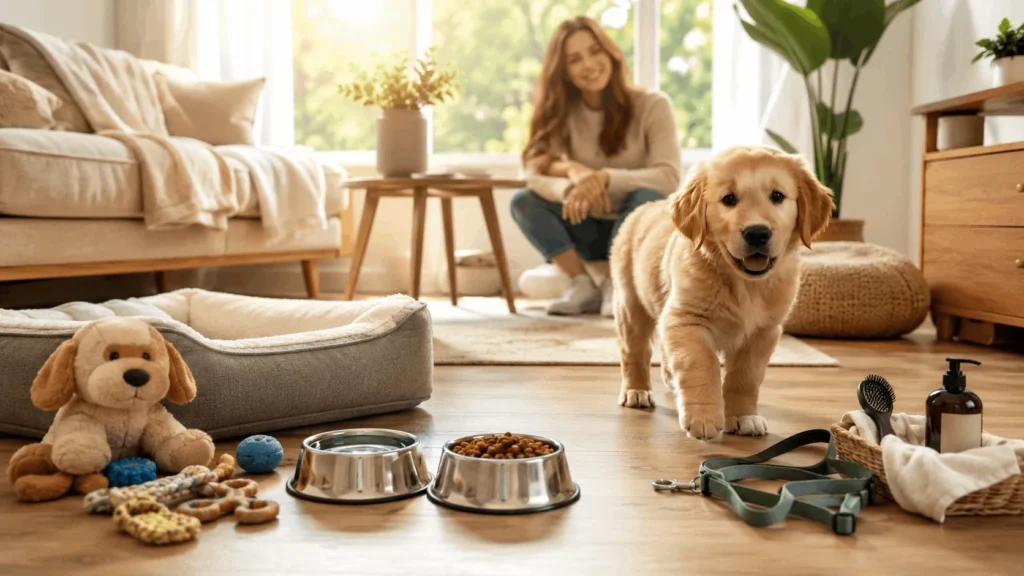
Choose a quiet area of your home that’s away from constant foot traffic, loud televisions, and busy doorways. This space should include:
- A comfortable puppy bed.
- A soft blanket.
- Food and water bowls.
- Safe chew toys.
- Easy access for supervision.
Avoid placing the bed directly under an air conditioner vent or in areas exposed to strong drafts. Young puppies can be sensitive to temperature changes, so aim for a comfortable environment where they can choose to move closer to or farther from airflow as needed.
Your Puppy Shopping Checklist
Before pickup day, make sure you have the essentials ready.
Feeding
- Stainless steel or ceramic food bowl.
- Stainless steel or ceramic water bowl.
- Measuring cup.
- Airtight food container.
Comfort
- Puppy bed.
- Washable blankets.
- Soft towels.
Toys
- Rubber chew toy.
- Rope toy.
- Interactive enrichment toy.
Cleaning
- Enzymatic cleaner.
- Paper towels.
- Waste bags.
Grooming
- Puppy shampoo.
- Brush suitable for the coat type.
- Nail trimmer.
- Dog-safe toothbrush and toothpaste.
Safety
- Collar.
- ID tag(optional).
- Harness.
- Baby gate (if needed).
Ask These Questions Before Picking Up Your Puppy
Whether you’re getting a puppy from a responsible breeder, rescue, or another owner, don’t leave without important information.
Ask:
- What food has the puppy been eating?
- How many meals are offered each day?
- When was the last meal?
- Has the puppy been dewormed?
- Which vaccinations has the puppy received?
- Has the puppy experienced any recent illness?
- Does the puppy have any allergies or medical concerns?
Having this information helps you maintain consistency during the first few days.
Puppy-Proof Your Home
Puppies explore with their mouths.
Walk through your home and remove potential hazards such as:
- Electrical cords.
- Medicines.
- Cleaning products.
- Chocolate.
- Grapes and raisins.
- Onions and garlic.
- Small toys.
- Batteries.
- Plastic bags.
If an item could fit in your puppy’s mouth, assume it may try to chew or swallow it.
Think About Hygiene
Until your puppy has completed its core vaccination series and your veterinarian advises it’s safe, reducing unnecessary exposure to contamination is important.
Simple habits include:
- Removing outdoor shoes before entering the puppy’s area.
- Keeping bedding clean and dry.
- Washing food and water bowls daily.
- Cleaning accidents promptly with an enzymatic cleaner.
These habits support a cleaner environment while your puppy’s immune system continues to develop.
Prepare Every Family Member
A new puppy can be exciting, especially for children.
Before the puppy arrives, explain:
- Let the puppy approach you first.
- Don’t wake a sleeping puppy.
- Avoid rough play.
- Give the puppy quiet time when resting.
- Never disturb the puppy while eating.
Consistency among family members helps your puppy settle more quickly.
Book Your First Veterinary Visit
Don’t wait until your puppy becomes sick.
Schedule a veterinary appointment within 24–48 hours of bringing your puppy home.
This first visit allows your veterinarian to:
- Perform a complete physical examination.
- Review vaccination and deworming records.
- Check weight and body condition.
- Look for parasites or congenital concerns.
- Discuss nutrition and preventive healthcare.
From Mukul’s Experience
One thing I’ve learned after working with hundreds of puppies is that preparation reduces problems. The happiest first week isn’t created by buying expensive accessories—it’s created by having the basics ready before your puppy walks through the door. A calm environment, the right food, fresh water, and careful observation matter far more than fancy products.
Quick Checklist Before Bringing Your Puppy Home
- Buy food and water bowls.
- Purchase the same food the puppy is currently eating.
- Prepare a quiet sleeping area.
- Puppy-proof your home.
- Buy safe chew toys.
- Store toxic foods securely.
- Remove outdoor shoes from the puppy’s area when practical.
- Book the first veterinary appointment.
- Prepare every family member.
- Plan the journey home.
Frequently Asked Questions
Start with the essentials: food and water bowls, a bed, puppy food, chew toys, a collar or harness, grooming supplies, and cleaning products for inevitable accidents.
Remove electrical hazards, toxic foods, medicines, cleaning chemicals, small objects, and anything your puppy could chew or swallow.
Yes. Ideally, buy the same food the puppy has already been eating to avoid an abrupt dietary change during the first few days.
Prepare a quiet sleeping area beside your bed or in a nearby room so your puppy feels secure while adjusting to its new home.
Not necessarily, but many owners find crates helpful for creating a safe resting space and supporting training when introduced positively.
Yes, provided they’re thoroughly cleaned and in good condition. Replace damaged items that could pose a safety risk.
A separate room isn’t essential. What’s important is providing a calm, safe area where your puppy can rest without constant disturbance.
Beyond the purchase or adoption cost, budget for food, veterinary care, vaccinations, deworming, bedding, toys, grooming supplies, and emergency expenses.
Ask about the puppy’s current food, feeding schedule, vaccination and deworming history, medical concerns, and any behavioural observations.
Many focus on buying accessories while overlooking the essentials: maintaining the puppy’s existing diet initially, preparing a safe environment, and scheduling an early veterinary check-up.
Conclusion
Bringing a puppy home is more than a memorable day—it’s the beginning of a lifelong commitment. The effort you invest before your puppy arrives can make those first weeks smoother, safer, and less stressful for both of you.
By preparing your home, gathering the right supplies, maintaining your puppy’s existing routine where possible, and planning for early veterinary care, you’ll give your newest family member the best possible start.
Next Step: Continue with our First 24 Hours With a Puppy guide to learn exactly what to do from the moment your puppy walks through the front door.