First 24 Hours With a Puppy: What Every New Owner Should Do
First 24 Hours With a Puppy: A First-Day Guide for New Owners
Bringing your puppy home is a moment you’ll remember for years. While it’s exciting to welcome a new family member, the first 24 hours can also be confusing, for both you and your puppy.
Everything your puppy once knew has changed. They’ve left their mother, littermates, familiar smells, and daily routine behind. It’s completely normal for a puppy to feel uncertain, sleepy, quiet, or even a little frightened during the first day. Your job isn’t to start training immediately or introduce everyone in the neighbourhood. Your goal is to help your puppy feel safe, comfortable, and secure.
In this guide, you’ll learn exactly what to do during your puppy’s first day at home, what to avoid, and how to build trust from the very beginning.
Before You Enter Your Home
The journey home can be stressful for young puppies. Keep the car ride calm and avoid loud music or unnecessary stops. If possible, have another family member sit beside the puppy to provide reassurance. Avoid placing an incompletely vaccinated puppy on public ground during the journey, especially in areas where unknown dogs may have been.
Give Your Puppy Time to Settle
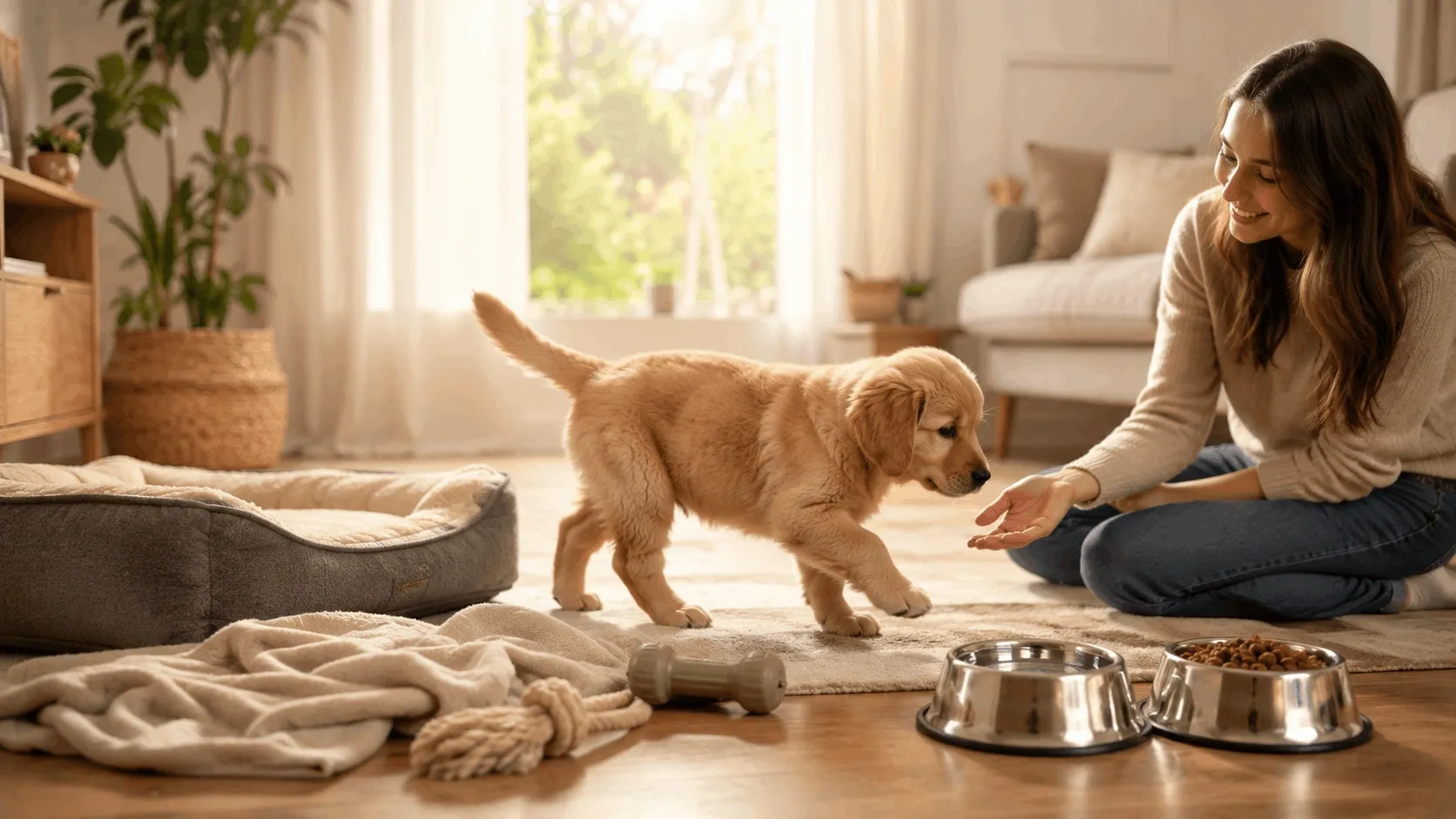
Once you arrive home, resist the temptation to introduce your puppy to every room immediately. Instead, take your puppy to the area you’ve already prepared with:
- A comfortable bed
- Fresh water
- Food bowls
- Safe chew toys
- A quiet environment
Allow your puppy to explore at its own pace. Sniffing is how dogs learn about their surroundings, so don’t rush or interrupt this process. Many puppies will spend the first 20–30 minutes simply exploring before they begin to relax.
Offer Fresh Water
After your puppy has had a little time to settle, place a bowl of fresh drinking water nearby. Always ensure clean water is available throughout the day. Some puppies drink immediately, while others may wait until they feel more comfortable. Both can be normal during the adjustment period.
Should You Feed Your Puppy Immediately?
One of the most common mistakes new owners make is offering multiple treats and different foods as soon as the puppy arrives. Instead, continue feeding the same food the puppy was already eating whenever possible. Young puppies generally do best with smaller meals spread throughout the day rather than one large meal.
If your puppy doesn’t eat its first meal immediately, don’t panic. Mild stress from the move can temporarily reduce appetite. However, if your puppy refuses food repeatedly, refuses water, or appears unwell, contact your veterinarian.
Observe Your Puppy’s Behaviour
The first day isn’t about changing your puppy’s routine, it’s about learning it. Watch how your puppy behaves.
Does it:
- Explore confidently?
- Prefer resting?
- Drink water normally?
- Show interest in food?
- Respond to people?
- Play for short periods?
Every puppy has a unique personality. Spending time observing these behaviours will help you understand its natural routine.
Begin Building Trust
Trust starts with calm, positive interactions. Speak softly. Allow your puppy to approach you instead of constantly picking it up. Gentle petting and simply sitting nearby often help a nervous puppy feel more secure than excessive excitement.
Remember, your puppy has already experienced a huge life change today.
Your Puppy’s First Toilet Break
Many puppies need a toilet break after:
- Waking up
- Eating
- Drinking
- Playing
Watch for common signs such as:
- Sniffing the floor
- Walking in circles
- Looking for a quiet corner
- Suddenly leaving play
When you notice these signs, calmly guide your puppy to the designated toilet area. If your puppy toilets in the correct place, praise it immediately. Don’t punish accidents, they’re a normal part of learning.
Introduce Family Members Slowly
Everyone wants to cuddle the new puppy, but too much attention can become overwhelming.
Instead:
- Introduce one or two people at a time.
- Encourage calm behaviour.
- Avoid loud noises.
- Supervise interactions with children.
Giving your puppy regular quiet breaks throughout the day is just as important as social interaction.
Don’t Take Your Puppy Outside Yet
Unless your veterinarian has confirmed that your puppy is fully protected, avoid taking it to public parks, footpaths heavily used by dogs, or other areas where infectious diseases may be present. Young puppies are particularly vulnerable to diseases such as parvovirus and canine distemper.
Instead, begin socialization safely at home by exposing your puppy to everyday household sounds, gentle handling, and positive interactions with family members.
Prepare for the First Night
The first night is often the hardest. Your puppy may cry because it misses its mother and littermates. This is completely normal. Place the puppy’s bed close to where you sleep so it feels less isolated. One practical tip many owners find comforting is placing a clean T-shirt you’ve recently worn near the bed. Your familiar scent may help your puppy settle more comfortably. Avoid turning crying into playtime, but do reassure your puppy with a calm voice if needed.
Book Your First Veterinary Visit
Schedule a veterinary appointment within 24–48 hours of bringing your puppy home. Even if your puppy appears healthy, this visit allows your veterinarian to:
- Perform a complete physical examination.
- Check body weight and body condition.
- Examine the eyes, ears, teeth, and skin.
- Look for ticks or fleas.
- Review vaccination and deworming records.
- Answer any questions about feeding, behaviour, or healthcare.
From Mukul’s Experience
One thing I’ve learned after working with hundreds of puppies is that the first day should be about observation, not expectation. Don’t worry if your puppy isn’t playful immediately or spends most of the day sleeping. Watch how it eats, drinks, rests, and explores. Those first observations will help you understand your puppy’s unique routine and make feeding, potty training, and healthcare much easier over the following weeks.
First-Day Checklist
- Prepare a quiet resting area.
- Offer fresh drinking water.
- Continue the puppy’s existing food.
- Observe appetite and behaviour.
- Watch for toilet signals.
- Introduce family members gradually.
- Keep the environment calm.
- Avoid public places.
- Schedule the first veterinary visit.
- Give your puppy plenty of time to rest.
Frequently Asked Questions
Yes. Many puppies sleep frequently after arriving home because travelling and adapting to a new environment can be tiring.
Mild stress can temporarily reduce appetite. Continue offering the usual food and contact your veterinarian if your puppy repeatedly refuses food or water or appears unwell.
Unless your puppy is unusually dirty or your veterinarian recommends it, it’s generally best to let your puppy settle before introducing a bath.
Most puppies cry because they miss their mother and littermates. Calm reassurance and a comfortable sleeping area nearby often help.
Choose sleeping arrangements that match the long-term habits you want to encourage. Consistency from the beginning helps avoid confusion later.
Basic routines, gentle handling, and name recognition can begin on the first day, but keep sessions very short and positive.
Yes. Some puppies need time to adjust. Allow your puppy to come out at its own pace without forcing interaction.
Only introduce your puppy to healthy, appropriately vaccinated dogs if your veterinarian considers it safe.
Ideally within 24–48 hours of arriving home.
Create a calm, predictable environment where your puppy can feel safe, begin trusting you, and settle into its new home.
Key Takeaways
- Focus on helping your puppy feel safe rather than overwhelming it with attention.
- Continue the same food whenever possible during the first few days.
- Observe your puppy’s natural habits before changing its routine.
- Watch for toilet signals and reward success.
- Keep fresh water available at all times.
- Arrange a veterinary check-up within the first 24–48 hours.
- Be patient, your puppy needs time to adjust.
Next Step: Continue with our Puppy Feeding Guide to learn how to choose the right food, feeding schedule, and portion sizes for your growing puppy.

[…] First 24 Hours With a Puppy: What Every New Owner Should Do […]