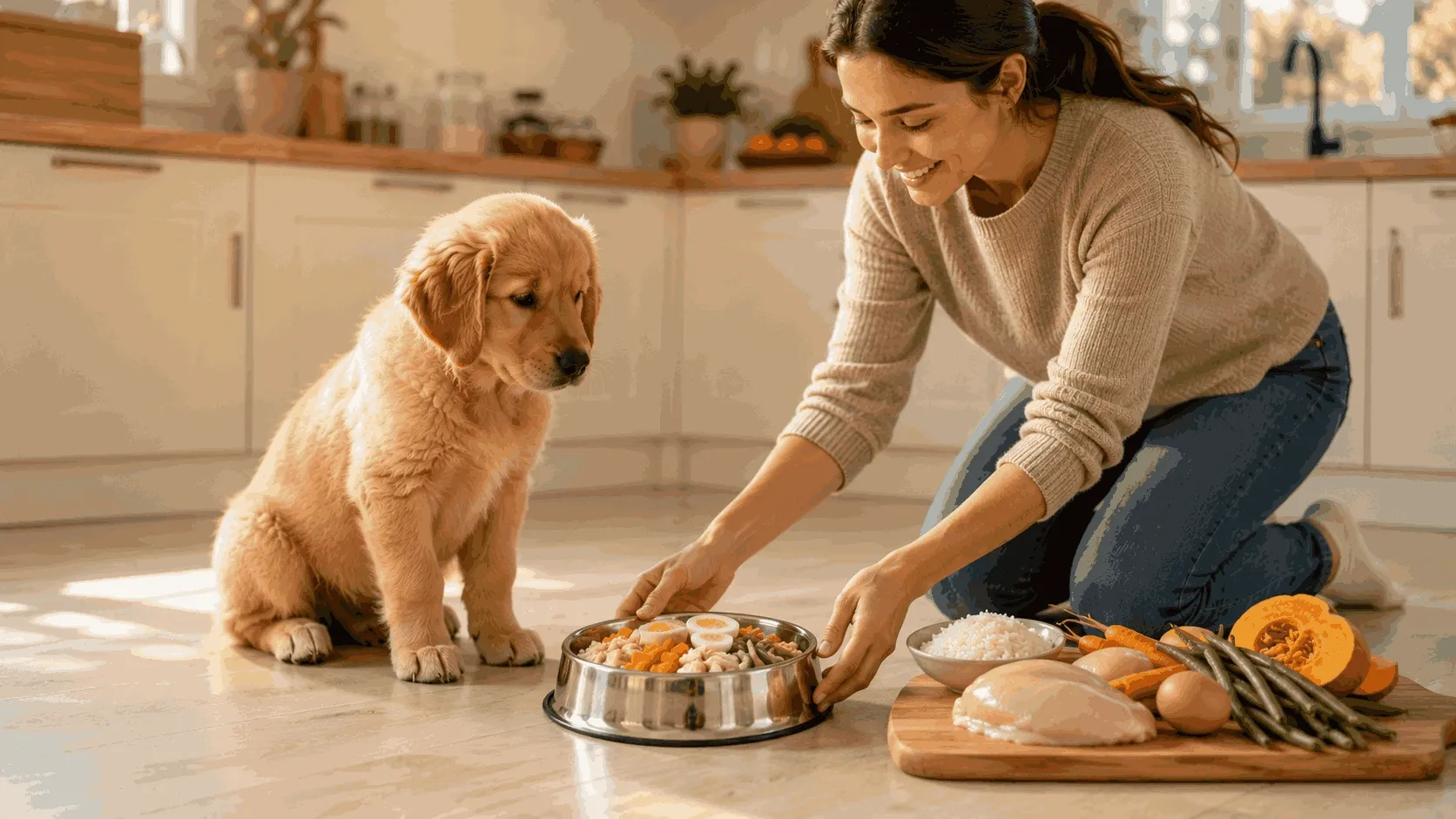
Homemade Puppy Food: Safe, Balanced Recipes
Many puppy owners want to prepare homemade meals because they enjoy knowing exactly what goes into their dog’s bowl. Fresh ingredients, home-cooked meals, and complete control over the diet can certainly be appealing.
However, preparing food for a growing puppy is different from cooking for an adult dog.
Puppies have specific nutritional requirements to support rapid growth, bone development, muscle formation, brain development, and immune function. Feeding homemade food without proper planning may lead to nutritional deficiencies or imbalances over time.
The good news is that homemade meals can be a valuable part of a puppy’s diet when they’re prepared correctly and with balanced nutrition in mind.
In this guide, you’ll learn which ingredients are suitable for growing puppies, simple meal ideas, foods to avoid, and practical tips for preparing safe homemade meals.
Can Puppies Eat Homemade Food?
Yes, but it should be approached thoughtfully.
Many puppies can enjoy homemade food alongside or as part of a nutritionally complete feeding plan.
If homemade food becomes your puppy’s primary diet, work with your veterinarian or a veterinary nutritionist to ensure the meals provide the correct balance of protein, fat, calcium, phosphorus, vitamins, and other essential nutrients.
Homemade food should nourish your puppy, not simply fill its stomach.
Benefits of Homemade Puppy Food
When prepared appropriately, homemade meals may offer several advantages:
- Fresh, minimally processed ingredients.
- Greater control over ingredient quality.
- Variety in texture and flavour.
- Flexibility for puppies with specific dietary needs under veterinary guidance.
- An opportunity to include wholesome, easily digestible foods.
Remember, “homemade” does not automatically mean “balanced.” Nutritional completeness is what matters most.
Building a Balanced Homemade Meal
A healthy homemade puppy meal should include a combination of:
High-Quality Protein
Protein supports healthy growth and muscle development.
Suitable options include:
- Boiled chicken (boneless)
- Turkey
- Lean beef
- Eggs
- Fish that is fully cooked and free of bones
Puppy-Friendly Carbohydrates
Carbohydrates provide energy for active, growing puppies.
Examples include:
- Cooked rice
- Sweet potato
- Oats
- Pumpkin
Choose ingredients that are easy to digest and cooked thoroughly.
Vegetables
Vegetables provide fibre and beneficial nutrients.
Suitable choices include:
- Pumpkin
- Carrots
- Green beans
- Peas (in moderation)
Cook vegetables until they’re soft enough for young puppies to digest comfortably.
Healthy Fats
Healthy fats support skin, coat, and brain development.
Appropriate sources may include naturally occurring fats in lean meats or veterinarian-approved supplements when necessary.
Avoid adding large amounts of oils unless specifically recommended.
Simple Homemade Meal Ideas
These are examples of balanced meal components, not complete long-term diet plans.
1. Chicken and Rice Meal
- Boiled chicken
- Cooked rice
- Pumpkin
- Carrots
2. Egg and Rice Meal
- Boiled egg
- Cooked rice
- Small amount of plain curd (if tolerated)
- Pumpkin
3. Feed and Sweet Potato Meal
- Lean cooked beef
- Sweet potato
- Green beans
Always introduce new foods gradually and observe your puppy for any digestive upset.
Can Puppies Eat Eggs?
Yes.
Fully cooked eggs are an excellent source of high-quality protein and several important nutrients. Avoid feeding raw eggs because they may carry bacteria such as Salmonella and can increase health risks.
Can Puppies Eat Curd?
Plain, unsweetened curd may be tolerated by some puppies in small amounts.
However, not every puppy digests dairy well.
If loose stools or digestive upset occur, discontinue the dairy product and consult your veterinarian.
Foods That Should Never Be Included
Some ingredients commonly found in kitchens can be dangerous for dogs.
Avoid feeding:
- Chocolate
- Grapes
- Raisins
- Onions
- Garlic
- Avocado
- Macadamia nuts
- Xylitol
- Alcohol
- Caffeine
- Excessively salty foods
- Spicy foods
- Cooked bones
If your puppy accidentally consumes a toxic food, contact your veterinarian immediately.
How to Introduce Homemade Food
Whenever adding homemade meals to your puppy’s diet:
- Introduce one change at a time.
- Begin with small portions.
- Monitor stool quality.
- Watch for vomiting or diarrhoea.
- Observe appetite and energy levels.
Gradual transitions help reduce digestive upset.
Homemade Food or Commercial Puppy Food?
This isn’t always an either-or decision. Many owners successfully combine commercial puppy food with carefully prepared homemade meals. Commercial puppy foods provide balanced nutrition formulated specifically for growth. Homemade food offers freshness and variety. The key is ensuring your puppy’s total diet remains nutritionally complete.
Common Homemade Feeding Mistakes
Avoid these common errors:
- Feeding only meat.
- Omitting important minerals.
- Using excessive seasoning.
- Adding onions or garlic.
- Feeding cooked bones.
- Offering large amounts of dairy.
- Changing ingredients every day.
- Guessing portion sizes without monitoring body condition.
From Mukul’s Experience
Over the years, I’ve found that many puppies enjoy freshly prepared meals, especially when they’re recovering from illness or transitioning to solid food. During recovery, I often focus on easily digestible ingredients such as boiled chicken, cooked rice, pumpkin, or boiled egg, while closely monitoring appetite, stool quality, and hydration. Every puppy responds differently, so careful observation is just as important as the recipe itself. Homemade meals should always support, not replace, appropriate veterinary care and balanced nutrition.
Quick Homemade Feeding Checklist
- Cook meat thoroughly.
- Use fresh ingredients.
- Introduce new foods gradually.
- Keep meals simple.
- Avoid toxic ingredients.
- Monitor digestion.
- Provide fresh drinking water.
- Discuss long-term homemade diets with your veterinarian.
Frequently Asked Questions
Not necessarily. Both can be appropriate when they provide complete and balanced nutrition.
Cooked rice can be part of a balanced diet, but it should not be the only ingredient.
Yes, when fully cooked and offered in appropriate portions.
Some puppies tolerate plain curd well, while others may not. Introduce it gradually and monitor for digestive upset.
Pumpkin, carrots, green beans, and peas are commonly used puppy-friendly vegetables when cooked appropriately.
It can, but only when carefully formulated to meet all nutritional requirements. Veterinary guidance is strongly recommended.
No. Puppies do not need added salt, chilli, or other seasonings.
Chicken can be an excellent protein source, but long-term diets should include appropriate nutritional variety and balance.
Refrigerate freshly prepared food promptly in clean, airtight containers and discard leftovers that have been left out too long.
Assuming that a meal made with healthy ingredients is automatically nutritionally complete. Puppies require balanced nutrition, not just fresh ingredients.
Key Takeaways
- Homemade food can be part of a healthy puppy diet when properly balanced.
- Use fresh, puppy-safe ingredients.
- Introduce new foods gradually.
- Avoid toxic foods and heavy seasoning.
- Monitor your puppy’s digestion and overall health.
- Consult your veterinarian before relying on homemade meals as the primary diet.
Next Step: Continue with our Best Puppy Food Brands Guide to compare commercial puppy foods, understand ingredient quality, and choose the right formula for your puppy’s age, breed, and budget.

[…] Homemade Puppy Food Guide: Healthy Recipes, Safe Ingredients & Feeding Tips […]