Puppy Potty Training Guide: How to Toilet Train Your Puppy Successfully
Potty training is one of the first and most important lessons your puppy will learn. While accidents are inevitable in the beginning, a consistent routine and a little patience can help your puppy understand where and when to toilet.
Many new puppy owners expect their puppy to learn within a day or two, but every puppy develops at its own pace. Some puppies understand the routine within a week, while others may take several weeks, depending on their age, breed, previous experiences, and consistency at home.
The good news is that puppies naturally give us clues before they need to toilet. Once you learn to recognize those signals, potty training becomes much easier.
In this guide, you’ll learn how to build a successful toilet routine, identify potty signals, prevent common mistakes, and help your puppy develop healthy habits from the very beginning.
Why Potty Training Matters
Successful potty training is about much more than keeping your home clean.
A consistent toilet routine helps your puppy:
- Develop predictable daily habits.
- Reduce anxiety and confusion.
- Learn faster through repetition.
- Build confidence.
- Strengthen communication with you.
Every successful toilet break in the correct location is another opportunity to reinforce good behaviour
Choose One Toilet Area
Before your puppy arrives, decide where you want it to toilet.
This could be:
- A designated indoor puppy pad area.
- A grass patch on your property.
- An outdoor toilet area once your veterinarian says it’s safe.
Whichever option you choose, consistency is the key.
Changing locations every few days often slows the learning process.
Understand Your Puppy’s Natural Toilet Routine
Most puppies don’t toilet randomly. Many follow predictable patterns. Common times when puppies may need a toilet break include:
- Shortly after waking up.
- After eating.
- After drinking water.
- After active play.
- Before settling down for a long nap.
By observing these patterns, you can often take your puppy to the toilet area before an accident happens.
Learn the Potty Signals
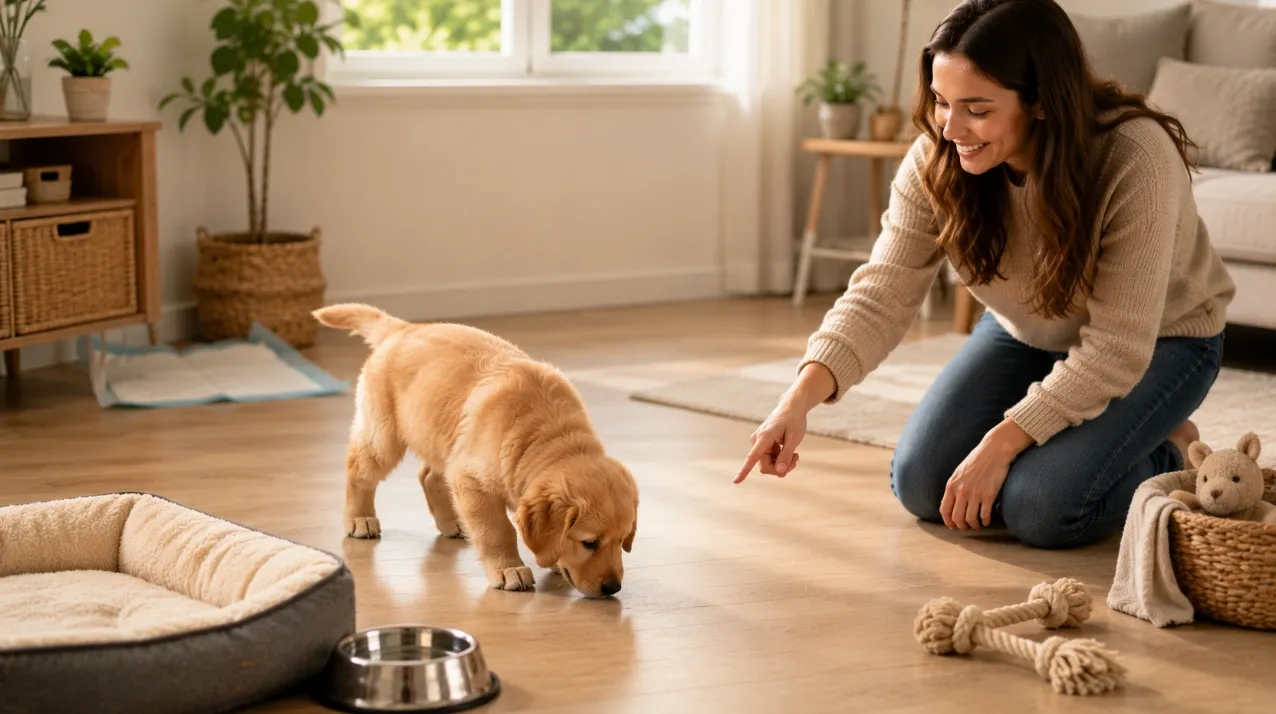
One of the easiest ways to prevent accidents is by recognizing your puppy’s body language.
Many puppies show signs such as:
- Repeated sniffing.
- Walking in circles.
- Suddenly leaving play.
- Looking for a quiet corner.
- Becoming restless.
When you notice these behaviours, calmly guide your puppy to the designated toilet area without rushing or frightening it.
Build a Consistent Routine
Routine is one of the biggest factors in successful potty training.
Try to:
- Feed meals at similar times each day.
- Offer regular toilet opportunities.
- Take your puppy to the same location.
- Use the same cue words consistently.
Predictability helps puppies understand what’s expected.
Reward Success Immediately
Positive reinforcement works far better than punishment.
As soon as your puppy toilets in the correct location:
- Offer calm praise.
- Give gentle affection.
- Reward with a small puppy-appropriate treat if it fits your overall feeding plan.
Immediate rewards help your puppy associate the correct behaviour with positive outcomes.
What If Your Puppy Has an Accident?
Accidents are completely normal. Never shout, hit, or punish your puppy.
Instead:
- Clean the area thoroughly using an enzymatic cleaner.
- Remove lingering odours.
- Continue following the routine.
Punishment often creates fear rather than understanding.
How Long Does Potty Training Take?
There isn’t a universal timeline. Some puppies learn within a week. Others may require several weeks or even longer.
Progress depends on:
- Age.
- Consistency.
- Supervision.
- Breed.
- Individual personality.
Focus on consistency rather than speed.
Should You Use Puppy Pads?
Puppy pads can be helpful in certain situations, particularly for:
- Apartment living.
- Very young puppies.
- Temporary indoor toilet training.
However, if your long-term goal is outdoor toileting, gradually transition your puppy to the desired location once your veterinarian confirms it’s safe to go outside.
Night-Time Toilet Training
Young puppies often cannot hold their bladder throughout the night.
Before bedtime:
- Offer one final toilet opportunity.
- Keep the sleeping area calm.
- Be prepared for occasional night-time toilet breaks if needed.
As your puppy matures, it will gradually develop better bladder control.
Common Potty Training Mistakes
Avoid these common errors:
- Punishing accidents.
- Changing toilet locations frequently.
- Skipping regular toilet breaks.
- Feeding at inconsistent times.
- Expecting instant results.
- Leaving the puppy unsupervised for long periods.
Patience and consistency always outperform frustration.
From Mukul’s Experience
One pattern I’ve observed after working with hundreds of puppies is that many of them show similar behaviours before toileting. After eating or waking up, they’ll often spend a few minutes playing before they begin sniffing the ground repeatedly and walking in small circles. Whenever I notice those signals, I calmly guide the puppy to the designated toilet area. Over time, the puppy begins to associate that location with toileting. Every puppy is different, but careful observation during the first week can make potty training much easier.
Quick Potty Training Checklist
- Choose one toilet area.
- Watch for sniffing and circling.
- Take your puppy out after meals and naps.
- Praise successful toilet breaks.
- Clean accidents thoroughly.
- Keep meal times consistent.
- Be patient.
- Never punish accidents.
Frequently Asked Questions
Some puppies learn within a week, while others may need several weeks or longer. Consistency is more important than speed.
Young puppies have limited bladder control. Regular toilet opportunities and supervision help reduce accidents.
Puppy pads can be useful, especially in apartments or before outdoor walks are safe. If your long-term goal is outdoor toileting, transition gradually.
Many puppies sniff the ground while searching for a suitable toilet spot. Learning this behaviour can help you guide them to the correct location.
No. Punishment may create fear and confusion. Positive reinforcement is a more effective training method.
Young puppies often need toilet breaks after waking, eating, drinking, and play sessions, although every puppy is different.
Healthy puppies generally shouldn’t be woken unnecessarily during naps, but very young puppies may need scheduled night-time toilet breaks.
An enzymatic pet-safe cleaner helps remove odours that might encourage repeat accidents.
Changes in routine, stress, illness, or inconsistent supervision can all contribute. If accidents become frequent or are accompanied by other symptoms, consult your veterinarian.
Once your veterinarian confirms your puppy has adequate protection after its core vaccinations, you can begin transitioning to outdoor toilet training in safe areas.
Key Takeaways
- Potty training takes patience and consistency.
- Learn your puppy’s natural toilet signals.
- Reward success immediately.
- Never punish accidents.
- Keep feeding and toilet routines predictable.
- Every puppy learns at its own pace.
- Careful observation is one of your greatest training tools.
Next Step: Continue with our Puppy Sleep Guide to understand how much sleep your puppy needs, why puppies cry at night, and how to build a healthy bedtime routine.