How Much Should You Feed a Puppy? (Complete Feeding Chart)
Proper nutrition is one of the most important investments you’ll make in your puppy’s future health. During the first year of life, your puppy grows rapidly, developing strong bones, muscles, organs, teeth, and an immune system that will support them throughout adulthood.
Many first-time puppy owners worry about whether they’re feeding too much, too little, or choosing the right food. With so many brands, feeding methods, and opinions available online, it’s easy to feel overwhelmed.
The good news is that feeding your puppy doesn’t have to be complicated. By understanding your puppy’s age, growth stage, appetite, and nutritional needs, you can build a healthy feeding routine that supports steady growth without guesswork.
In this guide, you’ll learn how to choose the right food, determine appropriate portion sizes, establish a feeding schedule, and recognize common mistakes that can affect your puppy’s health.
Why Nutrition Matters During Puppyhood
Puppyhood is the fastest growth phase in a dog’s life.
Every meal contributes to:
- Healthy bone development
- Muscle growth
- Brain development
- Strong immune function
- Healthy skin and coat
- Energy for learning and play
A balanced diet during these early months lays the foundation for lifelong health.
Start With the Food Your Puppy Already Knows
One of the biggest mistakes new owners make is switching foods immediately after bringing a puppy home. If possible, continue feeding the same food recommended by the breeder or previous owner for the first few days. Your puppy is already adapting to a new home, people, and routine, so keeping the diet consistent can help reduce digestive upset.
If you plan to change foods later, introduce the new food gradually over several days unless your veterinarian recommends otherwise.
Choosing the Right Food
No single food is perfect for every puppy. The best choice depends on your puppy’s:
- Age
- Breed
- Expected adult size
- Activity level
- Health status
- Budget
When comparing foods, look beyond the marketing claims and read the ingredient list. A quality puppy food should provide complete and balanced nutrition appropriate for growth.
Understanding Your Puppy’s Feeding Stage
Young puppies don’t all eat the same type of food.
Puppies That Are Still Weaning
Very young puppies transitioning from milk to solid food require soft, easy-to-eat meals. Depending on their stage of development, your veterinarian may recommend a commercial weaning diet or softened puppy food.
Puppies Around 7–8 Weeks Old
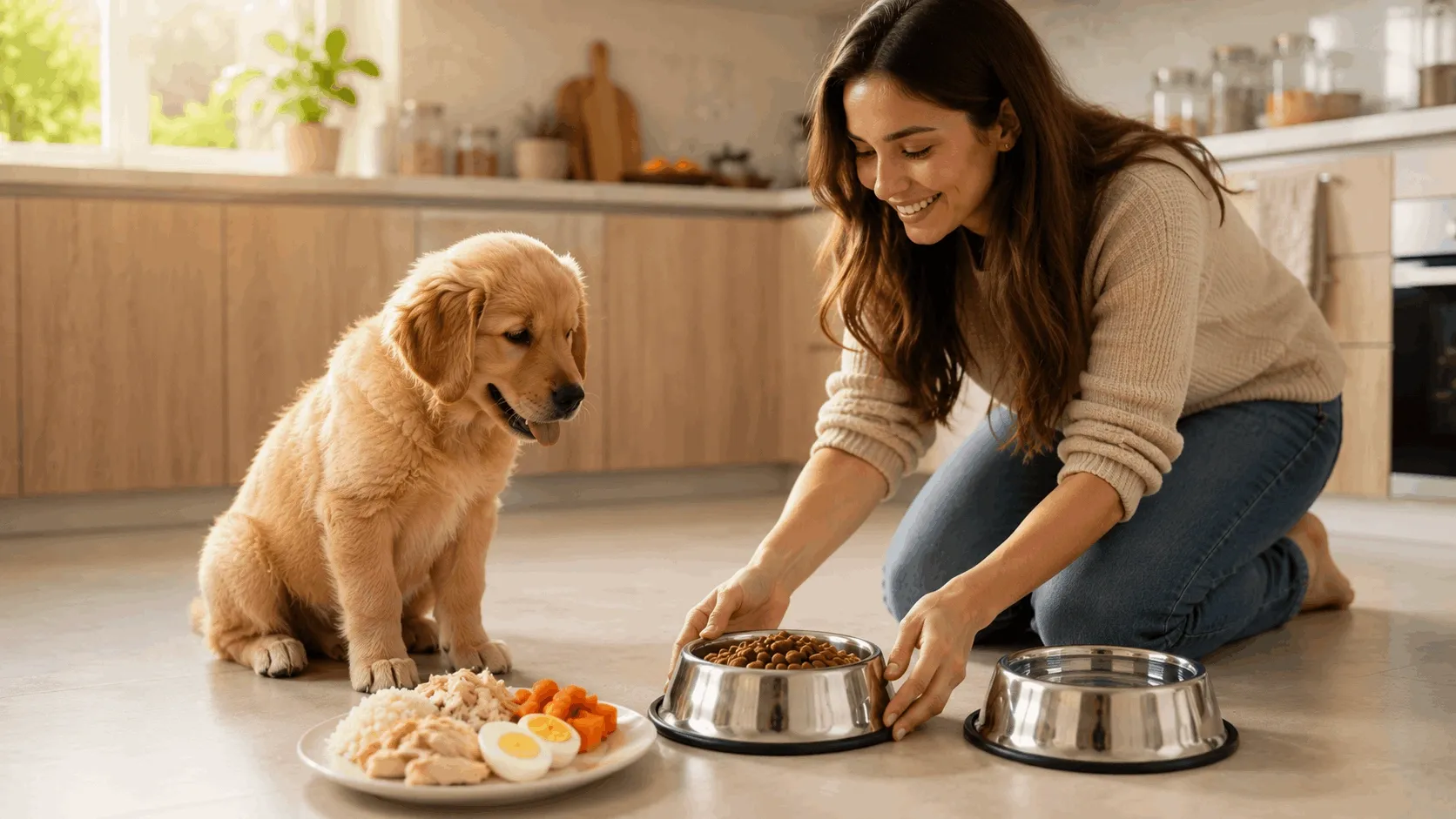
By this age, many puppies have a full set of baby teeth and can usually eat softened puppy kibble. Soaking kibble in warm water makes it easier to chew while the puppy adjusts to solid food. As chewing ability improves, gradually reduce the amount of water.
How Often Should You Feed a Puppy?
Young puppies have small stomachs but high energy requirements. Most puppies do best when their daily food allowance is divided into multiple meals.
As a general guide:
- Young puppies often eat three to four meals per day.
- As they grow, meal frequency can gradually decrease based on your veterinarian’s advice.
Consistency is more important than feeding at random times.
How Much Should You Feed?
There isn’t a single portion size suitable for every puppy. Food requirements depend on:
- Age
- Breed
- Body weight
- Food type
- Growth rate
- Activity level
Use the feeding guide on your puppy food as a starting point, then monitor your puppy’s body condition and growth during routine veterinary check-ups. Avoid increasing portions simply because your puppy seems eager to eat. Many puppies naturally enjoy food and may continue eating even when they have had enough.
Fresh Water Is Just as Important
Nutrition isn’t only about food. Fresh, clean drinking water should always be available. Replace the water regularly throughout the day and clean the bowl daily. Contact your veterinarian if your puppy suddenly refuses water or drinks significantly more than usual, especially if other symptoms are present.
Commercial Food vs Homemade Food
Many owners ask whether homemade food is better than commercial puppy food. Both approaches can work when managed correctly. Commercial puppy foods are formulated to meet the nutritional needs of growing dogs. Homemade diets require careful planning to ensure they provide adequate protein, energy, vitamins, and minerals. If you choose to prepare homemade meals regularly, consult your veterinarian or a veterinary nutritionist to ensure the diet is complete and balanced. Our dedicated Homemade Puppy Food Guide explores this topic in detail.
Reading the Ingredient List
Instead of choosing food based only on advertisements, check the label. Look for:
- Clearly identified animal protein sources.
- Balanced fat levels.
- Essential vitamins and minerals.
- DHA to support brain development.
- Foods formulated specifically for growing puppies.
Some owners also prefer foods with fewer artificial colours or preservatives, but the overall nutritional balance remains the most important factor.
Observe Your Puppy’s Appetite
After working with hundreds of puppies, one lesson stands out: Every puppy eats differently. Some finish every meal within minutes. Others eat slowly or occasionally leave food behind. Rather than comparing your puppy with others, observe its own routine. Healthy growth depends on appropriate nutrition, not on forcing your puppy to finish every bowl.
Signs Your Puppy Has Finished Eating
Many puppies naturally stop eating once they feel satisfied. Avoid encouraging your puppy to keep eating if it has already lost interest.
Regularly monitor:
- Appetite
- Body condition
- Energy levels
- Weight gain
- Stool quality
These observations provide valuable information about your puppy’s overall health.
Common Feeding Mistakes
Avoid these common errors:
- Overfeeding
- Offering large amounts of treats
- Frequently changing food brands
- Feeding heavily seasoned human food
- Leaving food available all day without guidance
- Ignoring feeding instructions on the label
- Forgetting to provide fresh drinking water
Small mistakes repeated every day can affect long-term health.
Foods Puppies Should Never Eat
Some human foods are dangerous for dogs.
Never feed:
- Chocolate
- Grapes
- Raisins
- Onions
- Garlic
- Xylitol
- Alcohol
- Caffeine
- Macadamia nuts
- Excessively salty or spicy foods
- Cooked bones
If your puppy accidentally eats a potentially toxic food, contact your veterinarian immediately.
From Mukul’s Experience
One of the most valuable lessons I’ve learned is that every puppy has its own appetite. Instead of assuming how much food your puppy needs, spend the first week observing its eating habits, energy levels, and body condition. Careful observation often tells you far more than comparing your puppy with another dog.
Quick Feeding Checklist
- Feed a complete puppy diet.
- Keep meal times consistent.
- Provide fresh water at all times.
- Avoid sudden food changes.
- Monitor appetite and body condition.
- Introduce new foods gradually.
- Avoid toxic human foods.
- Consult your veterinarian before making major dietary changes.
Frequently Asked Questions
Most young puppies require three to four meals each day, depending on age, breed, and veterinary advice.
Softening kibble with warm water is often helpful for young puppies that are still adjusting to solid food.
Yes, but the overall diet should remain nutritionally balanced. Introduce any changes gradually and seek veterinary guidance if homemade food will form a large part of the diet.
Growing puppies often have healthy appetites. Follow feeding recommendations rather than feeding continuously.
Fresh water should always be available. Individual needs vary depending on age, diet, activity, and weather.
Occasionally, mild stress or excitement may reduce appetite. If your puppy repeatedly refuses food, appears lethargic, or refuses water, contact your veterinarian.
Most puppies benefit from scheduled meal times because they help establish routine and make it easier to monitor appetite.
Frequent changes may upset the digestive system. If a change is necessary, transition gradually.
Treats can support training, but they should only make up a small part of your puppy’s daily calorie intake.
Monitor growth, body condition, energy levels, and discuss your puppy’s progress during regular veterinary visits.
Key Takeaways
- Feed a complete and balanced diet formulated for puppies.
- Continue the existing food initially before making gradual changes.
- Divide food into several meals each day.
- Keep fresh drinking water available.
- Observe your puppy’s appetite rather than comparing it with others.
- Avoid overfeeding and toxic human foods.
- Work with your veterinarian to adjust feeding as your puppy grows.
Next Step: Continue with our Homemade Puppy Food Guide to learn how to prepare safe, nutritious meals and understand when homemade diets are appropriate for growing puppies.