Puppy Exercise Guide: How Much Exercise Does a Puppy Need?
Exercise is an essential part of raising a healthy, happy puppy. It strengthens muscles, supports healthy bone development, improves coordination, and provides important mental stimulation. However, many first-time puppy owners make one of two mistakes: they either don’t provide enough activity, or they encourage too much exercise before the puppy’s body is fully developed. Young puppies are still growing. Their bones, joints, and growth plates remain delicate during the first few months of life, which means exercise should be fun, controlled, and appropriate for their age.
In this guide, you’ll learn how much exercise puppies need, which activities are safest, how to avoid overexertion, and how to build healthy exercise habits that support lifelong health.
Why Exercise Is Important
Regular exercise benefits more than just your puppy’s physical health.
Appropriate daily activity helps:
- Develop strong muscles and coordination.
- Support healthy weight management.
- Reduce boredom.
- Encourage confidence.
- Improve learning and training.
- Promote better sleep.
- Strengthen the bond between you and your puppy.
Exercise and rest work together. Active play followed by adequate sleep is a natural part of healthy puppy development.
How Much Exercise Does a Puppy Need?
There isn’t a single exercise schedule that suits every puppy.
The amount of activity depends on:
- Age.
- Breed.
- Size.
- Energy level.
- Health.
- Individual personality.
Most young puppies naturally alternate between short bursts of activity and long periods of sleep.
Instead of long exercise sessions, focus on several short periods of gentle play throughout the day.
As a general observation, many puppies enjoy 20–35 minute play sessions, although energetic breeds may remain active for longer and toy breeds may tire sooner. Always watch your puppy rather than the clock.
Choose Safe Activities
Safe exercise should be enjoyable without placing excessive stress on growing joints.
Good activities include:
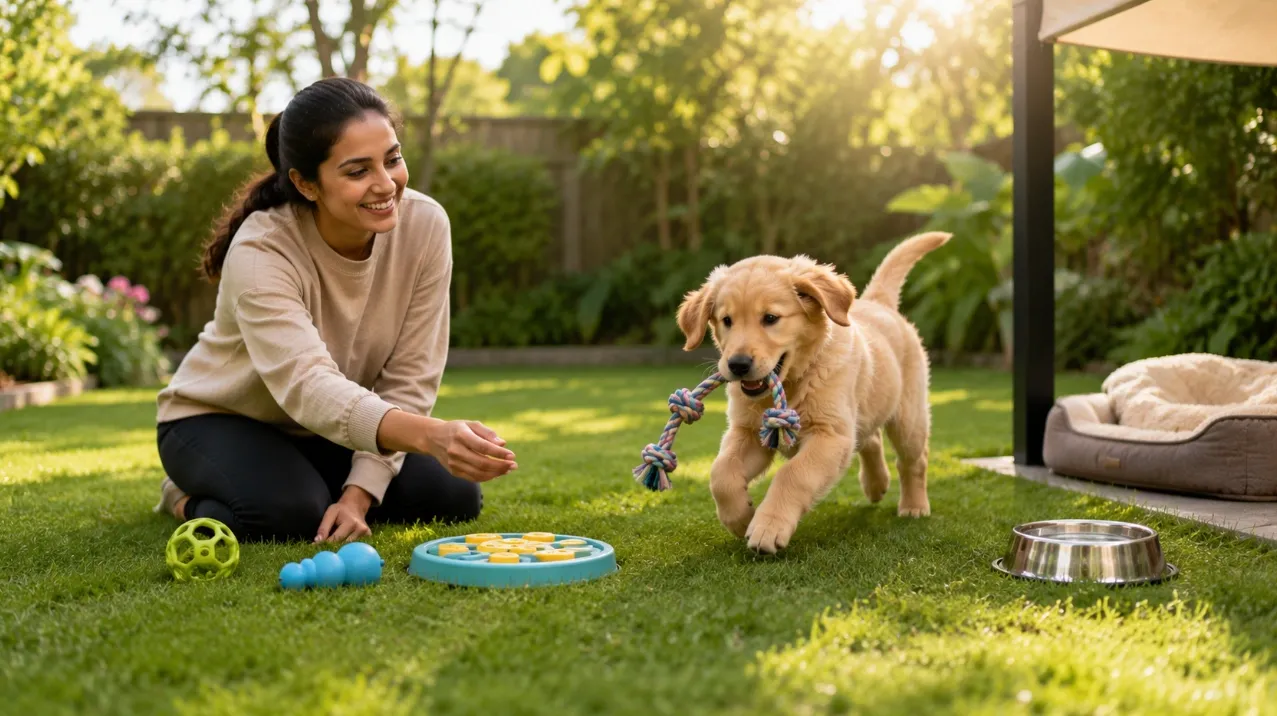
- Gentle games of fetch over short distances.
- Interactive toy play.
- Tug games with soft rope toys (played gently).
- Exploring different safe surfaces around the home.
- Short training sessions that combine learning with movement.
Keep sessions fun and stop before your puppy becomes exhausted.
Mental Exercise Is Just as Important
Physical exercise is only one part of healthy development.
Mental stimulation can help reduce boredom and encourage problem-solving.
Ideas include:
- Puzzle feeders.
- Food-dispensing toys.
- Basic obedience training.
- Name recognition games.
- Gentle scent games using hidden treats or toys.
Many puppies become pleasantly tired after a mentally engaging activity without requiring excessive physical exercise.
Can Puppies Go for Walks?
Walking is an excellent form of exercise, but timing matters.
Avoid taking your puppy to public parks, sidewalks heavily used by dogs, or other potentially contaminated areas until your veterinarian confirms it has adequate protection following its core vaccinations.
Once your puppy is cleared for outdoor walks:
- Start with short walks.
- Allow plenty of sniffing.
- Avoid forcing long distances.
- Increase activity gradually as your puppy grows.
Remember that exploring the environment is just as valuable as covering distance.
Are Stairs Safe for Puppies?
Repeated climbing up and down stairs isn’t recommended for young puppies, particularly small and toy breeds.
Frequent stair use can place unnecessary stress on developing joints and may increase the risk of slips or falls.
If stairs are unavoidable, supervise your puppy closely and consider carrying very young or small puppies whenever practical.
Signs Your Puppy Needs a Break
Puppies don’t always know when to stop.
Watch for signs such as:
- Slowing down.
- Heavy panting.
- Lying down during play.
- Reluctance to continue.
- Loss of interest in toys.
When you notice these signs, allow your puppy to rest and provide access to fresh water.
Avoid Overexercising
More exercise isn’t always better.
Avoid:
- Long-distance running.
- Forced jogging.
- Repeated jumping from furniture.
- High-impact activities.
- Continuous fetch sessions for extended periods.
Growing joints benefit from moderation.
Indoor Exercise Ideas
Bad weather doesn’t have to stop your puppy from being active.
Indoor ideas include:
- Hide-and-seek with toys.
- Short obedience sessions.
- Puzzle feeders.
- Gentle fetch in a hallway.
- Interactive tug games.
- Scent games.
These activities help keep your puppy engaged while remaining safe indoors.
Weather Matters
Exercise should always be adjusted according to the weather.
Hot weather:
- Exercise during the cooler morning or evening hours.
- Provide fresh drinking water.
- Avoid hot pavements and tiles.
- Check surfaces with your hand before allowing your puppy to walk on them.
Winter:
- Use a puppy jacket if temperatures are low.
- Avoid prolonged exposure to cold.
- Keep very young puppies warm before and after outdoor activity.
Rainy weather:
- Avoid prolonged exposure to wet conditions.
- Dry your puppy thoroughly afterwards.
- Keep the sleeping area warm and dry.
Breed Differences Matter
Not every puppy has the same exercise requirements. Working breeds generally require more physical and mental stimulation than toy breeds. Similarly, giant-breed puppies often need carefully controlled exercise to protect developing joints. Rather than comparing your puppy with another dog, learn what is appropriate for its breed, age, and individual energy level.
From Mukul’s Experience
One thing I’ve learned after working with hundreds of puppies is that owners often mistake constant activity for healthy activity. Puppies don’t need to be exhausted, they need balanced routines. In my experience, short play sessions followed by proper rest produce happier, healthier puppies than long periods of intense exercise. I also avoid encouraging very young puppies to use stairs regularly, especially toy breeds, because protecting growing joints early can prevent unnecessary problems later.
Quick Exercise Checklist
- Choose several short play sessions instead of one long workout.
- Include mental stimulation every day.
- Avoid overexertion.
- Delay public walks until your veterinarian confirms it’s safe.
- Keep fresh water available.
- Protect growing joints from excessive jumping and stairs.
- Adjust exercise according to the weather.
- Allow plenty of rest between play sessions.
Frequently Asked Questions
Exercise needs vary with age, breed, and health. Most puppies benefit from several short play sessions rather than prolonged activity.
Wait until your veterinarian advises that your puppy has adequate protection following its core vaccinations before visiting public areas.
Yes, gentle games of fetch over short distances can be an enjoyable form of exercise. Avoid excessive repetition.
Occasional supervised use may be unavoidable, but repeated stair climbing isn’t recommended for very young puppies, especially small breeds.
Watch for slowing down, heavy panting, lying down, or losing interest in play.
Yes, but choose cooler parts of the day, provide water, and avoid hot surfaces that could burn their paw pads.
Puzzle toys provide excellent mental stimulation and can help reduce boredom.
Long-distance running or jogging isn’t suitable for young puppies because their bones and joints are still developing.
Gentle play is fine, but avoid highly stimulating activities immediately before sleep. A calm routine often helps puppies settle more easily.
Trying to tire out a puppy with excessive activity instead of providing age-appropriate exercise, mental enrichment, and adequate rest.
Key Takeaways
- Exercise supports healthy physical and mental development.
- Several short play sessions are better than prolonged exercise.
- Mental stimulation is just as important as physical activity.
- Protect growing joints by avoiding excessive impact and frequent stair use.
- Adjust activity based on your puppy’s breed, age, and the weather.
- Watch your puppy for signs of fatigue rather than following a rigid schedule.
- Balance exercise with plenty of rest and quality sleep.
Next Step: Continue with our Puppy Vaccination Guide to learn about your puppy’s vaccination schedule, booster doses, deworming, and when it’s safe to explore the outside world.