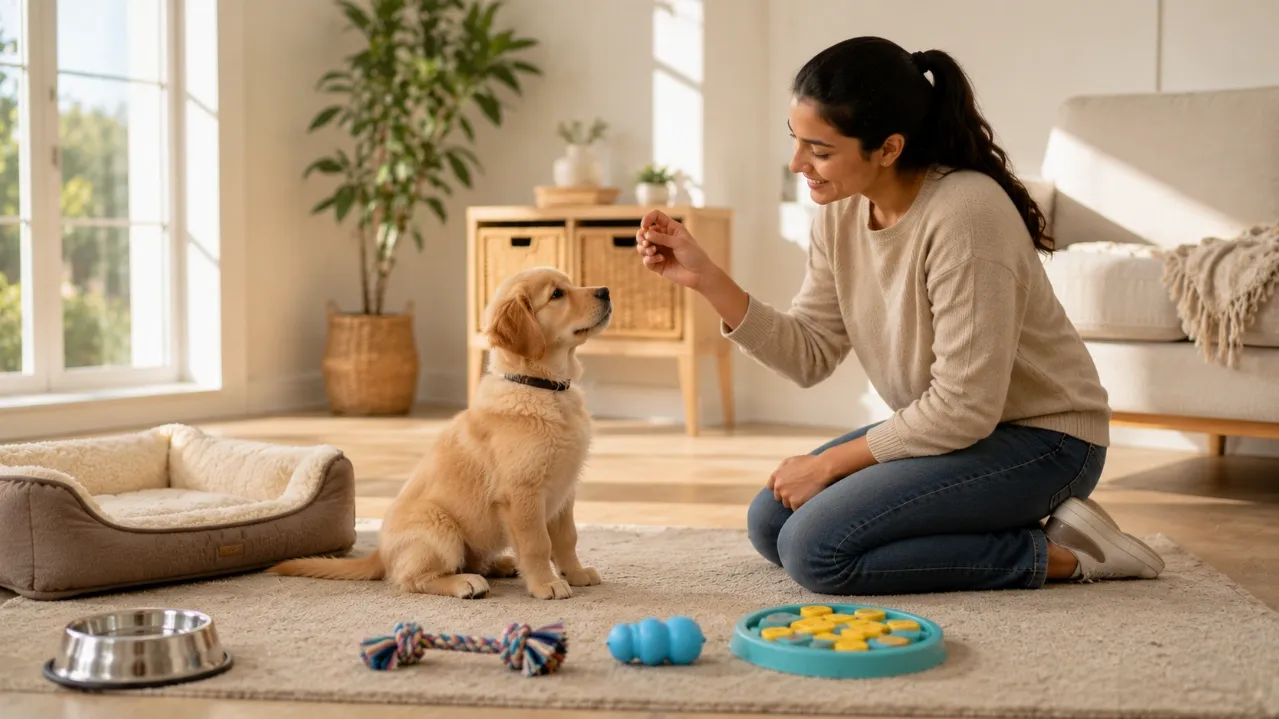
Puppy Behaviour Guide: Understanding Your Puppy’s Behaviour & Training It the Right Way
Every puppy is born with curiosity, not manners. Chewing your slippers, biting your hands, jumping on guests, barking for attention, and running away with socks are all behaviours that can frustrate new owners. Fortunately, most of these behaviours are completely normal during puppyhood.
The key isn’t to punish your puppy. It’s to understand why the behaviour happens and teach a better alternative. Your puppy is learning every single day. Every interaction, routine, and response from you helps shape the adult dog it will eventually become. In this guide, you’ll learn why puppies behave the way they do, how to respond appropriately, and which training habits create confident, well-mannered adult dogs.
Why Puppy Behaviour Matters
Behaviour training starts the day your puppy arrives home. Good habits formed early are much easier to maintain than correcting unwanted behaviours later.
Teaching your puppy how to behave helps:
- Build trust.
- Improve communication.
- Prevent frustration.
- Increase confidence.
- Create a stronger lifelong bond.
Training isn’t about controlling your puppy, it’s about teaching it how to succeed.
Why Do Puppies Bite?
Puppy biting is one of the biggest concerns for first-time owners.
In most cases, biting happens because puppies are:
- Teething.
- Exploring the world.
- Playing.
- Seeking attention.
Young puppies investigate objects using their mouths much like human babies. This behaviour is normal, but it still needs guidance.
How to Reduce Puppy Biting
Instead of allowing your puppy to chew your hands, clothes, or furniture, redirect that chewing instinct toward appropriate toys.
Offer:
- Puppy-safe chew toys.
- Rope toys.
- Durable rubber chew toys.
If your puppy isn’t interested in the toy, you can apply a small amount of dog-safe peanut butter to encourage interaction. Avoid rough games that encourage your puppy to chase or bite hands. Reward calm behaviour whenever your puppy chooses an appropriate toy instead.
Why Do Puppies Chew Everything?
Chewing serves several purposes.
It helps puppies:
- Relieve teething discomfort.
- Explore new objects.
- Reduce boredom.
- Stay mentally engaged.
Provide plenty of appropriate chew toys and keep shoes, electrical cables, and other valuable items out of reach. Managing the environment is just as important as training.
Jumping on People
Many owners unintentionally reward jumping by immediately giving attention.
If your puppy jumps:
- Stay calm.
- Avoid rewarding the behaviour with excitement.
- Wait for all four paws to be on the ground.
- Reward calm greetings instead.
Consistency from every family member is essential.
Barking
Puppies bark for many different reasons.
Common causes include:
- Excitement.
- Attention seeking.
- Fear.
- Loneliness.
- Alerting you to something unfamiliar.
Instead of simply trying to stop barking, identify the reason behind it. Meeting your puppy’s physical and emotional needs often reduces unnecessary barking naturally.
Separation and Loneliness
The first few days away from the litter can be emotionally challenging. Some puppies cry because they miss their mother and siblings.
You can help by:
- Keeping your puppy’s bed nearby during the first nights.
- Speaking calmly.
- Maintaining a predictable routine.
- Offering a clean T-shirt carrying your scent.
Gradually teach your puppy that short periods alone are safe and temporary.
Understanding Body Language
Dogs communicate long before they bark or growl.
Learning your puppy’s body language helps you respond appropriately.
Signs of a relaxed puppy include:
- Loose body posture.
- Soft eyes.
- Curious exploration.
- Gentle tail movement.
Signs that your puppy may be uncomfortable include:
- Tucked tail.
- Crouching.
- Lip licking.
- Yawning in stressful situations.
- Avoiding eye contact.
- Hiding.
Respect these signals instead of forcing interaction.
The First Commands Every Puppy Should Learn
Keep training sessions short, positive, and fun. A practical learning order is:
- Name recognition.
- “No” (used calmly and consistently).
- “Come.”
- “Sit.”
- “Stay.”
- “Leave It.”
Use rewards, praise, and repetition rather than punishment. Short sessions of 5 – 10 minutes are usually more productive than long training sessions.
Using Treats the Right Way
Treats are excellent training tools, but they shouldn’t replace balanced nutrition. Introduce treats once your puppy is around three months of age, or according to your veterinarian’s advice.
Remember:
- Treats should only make up a small portion of your puppy’s daily calories.
- Don’t reward behaviour you don’t want repeated.
- Gradually reduce treat dependence as behaviours become reliable.
Praise, toys, and play can also be valuable rewards.
Correcting Unwanted Behaviour
Avoid shouting or physical punishment.
Instead:
- Redirect unwanted behaviour.
- Reward the behaviour you want.
- Stay consistent.
- Remove temptations when necessary.
- Be patient.
Your puppy learns through repetition, not fear.
Breed Differences Matter
Behaviour varies between breeds.
For example:
- Working breeds often require more mental stimulation.
- Toy breeds may be more sensitive to environmental changes.
- Herding breeds naturally enjoy problem-solving.
- Sporting breeds generally enjoy interactive games.
Understanding your puppy’s breed characteristics helps you set realistic expectations.
Common Behaviour Mistakes
Avoid these common errors:
- Inconsistent rules.
- Punishing normal puppy behaviour.
- Encouraging rough play.
- Ignoring mental stimulation.
- Leaving valuable objects within reach.
- Expecting adult behaviour from a young puppy.
Remember that training is a gradual process.
When Should You Seek Professional Help?
Some behaviours deserve prompt attention.
Speak with your veterinarian or a qualified dog trainer if your puppy shows:
- Persistent aggression.
- Extreme fear.
- Repeated guarding of food or toys.
- Self-injury.
- Sudden behavioural changes.
- Behaviour that worsens despite consistent positive training.
Early intervention is often more effective than waiting.
From Mukul’s Experience
One lesson I’ve learned after working with hundreds of puppies is that behaviour problems often begin with misunderstanding, not stubbornness. Puppies don’t chew your shoes because they’re trying to annoy you, they chew because they’re teething or exploring. They don’t cry at night to manipulate you, they’re adjusting to a completely new life. When owners learn to understand the reason behind a behaviour instead of reacting emotionally, training becomes much easier. I always encourage positive reinforcement, consistency, and careful observation rather than punishment.
Quick Behaviour Checklist
- Reward good behaviour immediately.
- Redirect biting to chew toys.
- Keep training sessions short.
- Follow consistent household rules.
- Use positive reinforcement.
- Provide daily mental stimulation.
- Understand your puppy’s body language.
- Be patient and realistic.
Frequently Asked Questions
Most puppies bite because they’re teething, playing, or exploring. Redirect the behaviour to an appropriate chew toy instead of allowing hand biting.
Provide plenty of safe chew toys, supervise your puppy, and prevent access to furniture whenever possible.
Yes. Barking is a natural form of communication. The goal is to understand why your puppy is barking and address the underlying cause.
Many puppies miss their mother and littermates during the first few nights. A calm routine and a comfortable sleeping area nearby often help.
Training starts from the day your puppy comes home. Begin with simple behaviours such as name recognition and recall using short, positive sessions.
Yes. Once your puppy is old enough, treats can be an effective reward. Use them in moderation and combine them with praise and play.
Most puppies learn best with sessions lasting about 5–10 minutes, repeated throughout the day.
Distractions, inconsistent training, fatigue, or lack of motivation can all affect learning. Keep sessions short and reward success immediately.
No. Positive reinforcement and redirection are generally more effective than punishment for teaching puppies.
Seek professional guidance if your puppy shows persistent aggression, severe fear, resource guarding, or behaviours that continue despite consistent positive training.
Key Takeaways
- Most puppy behaviours are normal developmental stages.
- Understand the reason behind the behaviour before trying to correct it.
- Use positive reinforcement rather than punishment.
- Redirect biting and chewing toward appropriate toys.
- Begin basic obedience training early.
- Keep routines consistent across the whole family.
- Patience, repetition, and understanding create well-behaved adult dogs.
Next Step: Continue with our Emergency Signs Every Puppy Owner Should Know guide to learn how to recognize life-threatening symptoms, understand when immediate veterinary care is needed, and prepare for unexpected emergencies.