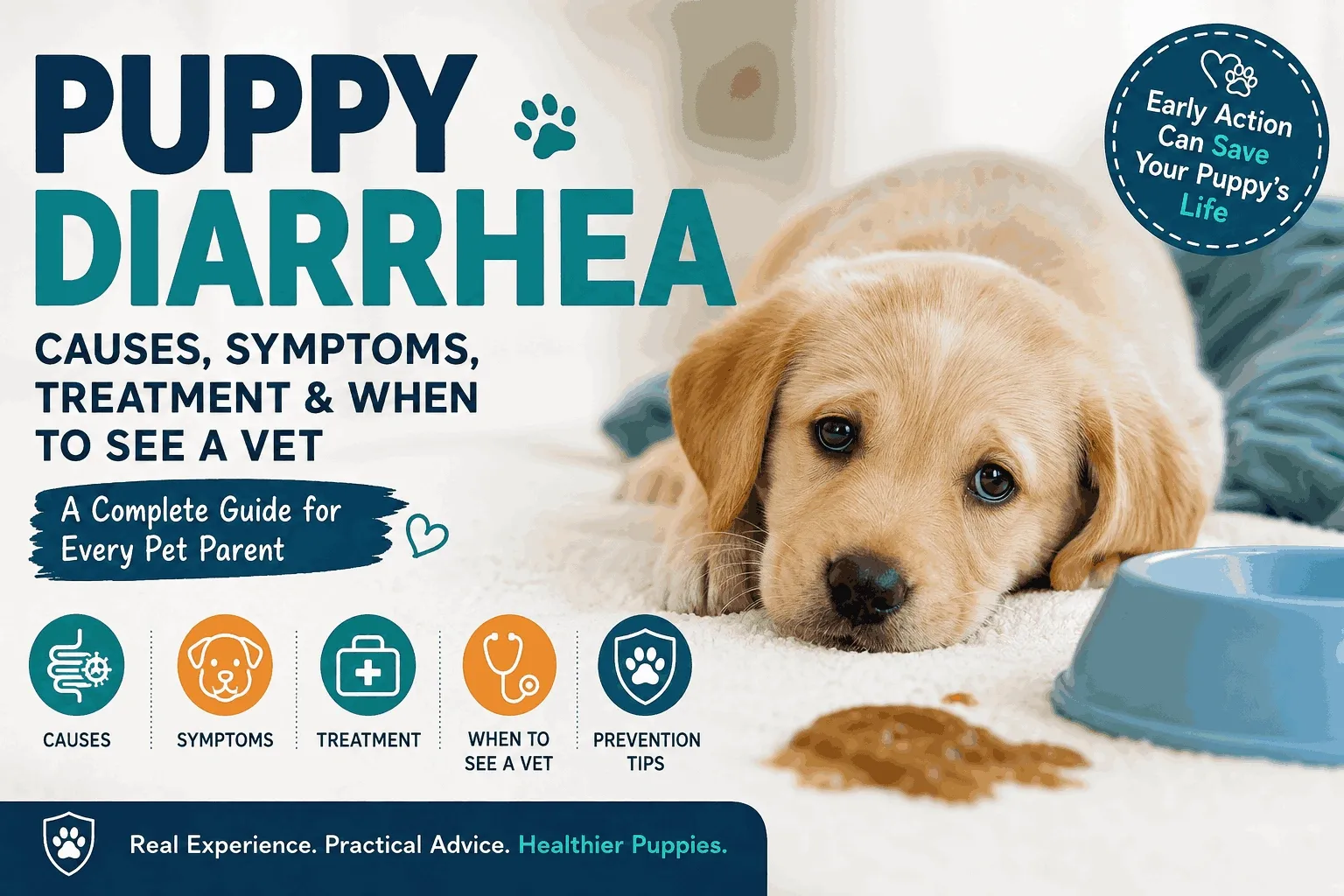
Puppy Diarrhea: What Every Pet Parent Needs to Know
Watching your puppy develop diarrhea can be alarming, especially if they were healthy and playful just a few hours earlier. While an occasional loose stool may result from a minor dietary upset, persistent or severe diarrhea can quickly become life-threatening in young puppies because they lose fluids much faster than adult dogs.
At FurrJournal, we’ve worked alongside veterinarians and cared for thousands of puppies over the years. One pattern has become clear: the puppies that receive veterinary attention early generally have a much better chance of recovering than those whose symptoms are dismissed as “just an upset stomach.”
One of the biggest mistakes new puppy owners make is waiting until they notice blood in the stool before seeking help. In reality, many serious illnesses, including canine parvovirus, often begin with subtle changes in behavior long before bloody diarrhea appears.
In this guide, you’ll learn:
- The most common causes of puppy diarrhea
- Early warning signs many owners overlook
- Which symptoms require emergency veterinary care
- What you should (and shouldn’t) do while arranging a veterinary visit
- How veterinarians diagnose and treat diarrhea in puppies
Important: This article is intended for educational purposes and should never replace professional veterinary advice. If your puppy has persistent diarrhea, blood in the stool, repeated vomiting, extreme weakness, or refuses food and water, seek veterinary care immediately.
Why Diarrhea Is More Dangerous in Puppies Than Adult Dogs
Puppies have much smaller fluid reserves than adult dogs. Even a few episodes of watery diarrhea can lead to dehydration, electrolyte imbalance, and low blood sugar within a short period, particularly in toy breeds and puppies younger than three months.
In our experience, toy breeds such as Toy Pomeranians tend to become dehydrated surprisingly quickly because of their small body size. This is why veterinarians often recommend prompt evaluation instead of waiting to “see if it gets better tomorrow.”
Young puppies are also more vulnerable because:
- Their immune system is still developing.
- Many have not completed their vaccination schedule.
- They are commonly exposed to intestinal parasites.
- Stress from transport or rehoming can temporarily weaken their resistance to illness.
The younger the puppy, the more seriously diarrhea should be taken.
Early Signs Most Puppy Owners Miss
Many people assume diarrhea begins with loose stool. However, one observation we’ve repeatedly seen while caring for puppies is that behavior often changes before the digestive symptoms become obvious.
Some of the earliest warning signs include:
- Sleeping much more than usual
- Losing interest in playing
- Reduced enthusiasm during feeding
- Refusing food before refusing water
- Becoming unusually quiet or withdrawn
These changes can appear several hours before significant diarrhea develops.
When a puppy that is normally energetic suddenly becomes lethargic and refuses food, it’s worth monitoring closely, even if they haven’t yet developed severe diarrhea.
What Causes Diarrhea in Puppies?
Diarrhea isn’t a disease by itself. It’s a symptom that can have many different causes, ranging from mild digestive upset to life-threatening infections.
Based on our practical experience working with puppies, these are among the most common causes.
1. Intestinal Worms
Heavy worm infestations are one of the leading causes of diarrhea in young puppies.
Common parasites may cause:
- Loose stools
- Poor weight gain
- Pot-bellied appearance
- Reduced appetite
- Occasional vomiting
Regular deworming is one of the simplest ways to reduce this risk.
2. Sudden Food Changes
Changing your puppy’s food overnight is one of the most common reasons for digestive upset.
A puppy’s digestive system needs time to adapt to new ingredients. Abruptly switching from the breeder’s diet to a different brand may trigger diarrhea.
Whenever possible, continue feeding the same food your puppy was eating before rehoming and transition gradually over several days if a diet change is needed.
3. Milk Feeding Mistakes
Many people mistakenly believe puppies should continue drinking cow’s milk after leaving their mother.
Unfortunately, many puppies cannot digest cow’s milk properly, which may lead to:
- Loose stools
- Gas
- Abdominal discomfort
- Digestive upset
If milk replacement is genuinely needed, it should be recommended by a veterinarian and formulated specifically for puppies.
4. Overfeeding Treats
New puppy owners naturally want to spoil their new family member.
Unfortunately, offering multiple treats, table scraps, or rich foods during the first few days often overwhelms a puppy’s digestive system.
Treats should make up only a small portion of a puppy’s diet and should never replace a balanced puppy food.
5. Stress After Transport or Rehoming
One cause that many articles overlook is stress-related diarrhea.
Moving to a new home is a major life event for a young puppy.
Within just a few days, they’re exposed to:
- A new environment
- New people
- Different feeding schedules
- New smells
- Different water
- Separation from their mother and littermates
This stress alone may contribute to temporary digestive upset.
6. Vaccination Timing
Some puppies may develop mild digestive changes after vaccination.
Although mild gastrointestinal upset can occasionally occur, persistent diarrhea, severe lethargy, repeated vomiting, or refusal to eat should never be dismissed as a “normal vaccine reaction.” Contact your veterinarian if these symptoms develop.
7. Viral and Bacterial Infections
Some infections require immediate veterinary attention.
These include illnesses such as:
- Canine parvovirus
- Bacterial intestinal infections
- Severe gastrointestinal inflammation
These conditions often require hospitalization and supportive treatment.
Symptoms of Puppy Diarrhea
Not every episode of diarrhea looks the same.
Pay attention to:
| Symptom | What It May Suggest |
|---|---|
| Soft stool | Mild digestive upset |
| Watery diarrhea | Significant fluid loss |
| Mucus in stool | Intestinal irritation |
| Green-colored stool | Possible digestive disturbance requiring veterinary assessment |
| Blood in stool | Medical emergency until proven otherwise |
| Extremely foul odor | Serious intestinal disease may be present |
| Vomiting with diarrhea | Higher risk of dehydration |
| Refusing food | Significant illness |
| Refusing water | Emergency, especially in young puppies |
Rather than focusing only on the appearance of the stool, always assess your puppy’s overall behavior.
A playful puppy with one loose stool is very different from a quiet puppy that refuses food and develops repeated watery diarrhea.
When Should You See a Veterinarian Immediately?
Do not wait until tomorrow if your puppy develops any of the following:
- Bloody diarrhea
- Persistent watery diarrhea
- Repeated vomiting
- Refusing food
- Refusing water
- Extreme weakness
- Collapse
- Fever
- Continuous diarrhea lasting several hours
- Extremely foul-smelling stool
- Diarrhea in an unvaccinated puppy under three months of age
A Practical Lesson We’ve Learned
One of the most valuable lessons from years of working with puppies is this:
Loose stool isn’t always an emergency, but waiting until there’s blood often is.
Another warning sign that has repeatedly prompted urgent veterinary evaluation in our experience is diarrhea with an intense rotten-meat odor, particularly when accompanied by lethargy and loss of appetite. While this does not confirm parvovirus on its own, it raises concern for serious intestinal disease and warrants immediate veterinary assessment.
What To Do During the First Few Hours
If your puppy develops diarrhea, stay calm and focus on getting professional help as quickly as possible.
1. Isolate the Puppy
If you have multiple dogs, separate the affected puppy immediately.
Many infectious diseases can spread rapidly through shared bowls, bedding, toys, and contaminated surfaces.
2. Observe Carefully
Before visiting the veterinarian, note:
- When diarrhea started
- Number of episodes
- Stool color
- Presence of mucus or blood
- Vomiting
- Appetite
- Water intake
- Energy level
These details help your veterinarian make faster decisions.
3. Keep the Puppy Warm
Young puppies can lose body heat quickly, especially if they’re dehydrated.
Provide a clean, dry, warm resting area while arranging veterinary care.
4. Avoid Random Home Remedies
One of the most common mistakes we’ve encountered is owners giving whatever remedy they find online or hear from friends.
Avoid giving:
- Human anti-diarrheal medicines
- Antibiotics without veterinary advice
- Herbal mixtures
- Random supplements
These can delay appropriate treatment or even worsen the condition.
5. Don’t Delay Veterinary Care
If your puppy is becoming quieter, refusing food, or developing repeated watery diarrhea, don’t spend the entire day hoping it resolves on its own.
Early diagnosis can make a significant difference, particularly if the underlying cause turns out to be parvovirus, severe dehydration, or another serious illness.
How Veterinarians Diagnose Puppy Diarrhea
Because diarrhea can have many different causes, your veterinarian will first try to determine why your puppy is sick rather than simply treating the loose stool.
Depending on your puppy’s age, symptoms, and medical history, your veterinarian may recommend one or more of the following:
- A physical examination to assess hydration, body temperature, and abdominal pain.
- A fecal examination to check for intestinal parasites or abnormal bacteria.
- A rapid canine parvovirus test if parvovirus is suspected.
- Blood tests in severely ill puppies to evaluate dehydration, infection, and organ function.
- Imaging, such as X-rays or ultrasound, if a foreign object or intestinal blockage is suspected.
Providing your veterinarian with details such as when the diarrhea started, how many episodes have occurred, whether there is blood or mucus in the stool, and whether your puppy has been vomiting can help reach a diagnosis more quickly.
How Puppy Diarrhea Is Treated
Treatment depends entirely on the underlying cause.
A puppy with mild dietary upset may only require supportive care, while a puppy diagnosed with parvovirus or severe dehydration often needs intensive hospitalization.
Common veterinary treatments include:
Fluid Therapy
One of the biggest dangers of diarrhea is dehydration.
Depending on the severity, your veterinarian may recommend:
- Oral electrolyte solutions for mild cases.
- Subcutaneous fluids in selected situations.
- Intravenous (IV) fluids for puppies that are dehydrated, weak, or unable to drink.
Fluid therapy is often the most important part of treatment because it replaces water and electrolytes lost through diarrhea.
Medications
Your veterinarian may prescribe medications such as:
- Anti-nausea medications.
- Gastrointestinal protectants.
- Probiotics.
- Deworming medication if parasites are identified.
- Antibiotics only when clinically indicated.
Avoid giving antibiotics or other medications at home unless they have been prescribed specifically for your puppy.
Nutritional Support
Very young puppies have limited energy reserves and can become weak quickly if they stop eating.
Based on the cause of diarrhea and your puppy’s condition, your veterinarian will advise when and how to restart feeding safely.
Recovery diets are usually introduced gradually rather than returning immediately to normal feeding.
Feeding a Puppy During Recovery
One of the questions veterinarians hear most often is:
“What should I feed my puppy after diarrhea?“
The answer depends on the puppy’s age, hydration status, diagnosis, and overall condition.
From our practical experience, one of the biggest mistakes owners make is offering treats, rich foods, or dry kibble immediately after diarrhea begins.
Instead:
- Follow your veterinarian’s feeding instructions.
- Avoid introducing new foods.
- Do not offer treats while your puppy is recovering.
- Feed small, frequent meals when advised by your veterinarian.
- Return to the puppy’s regular diet gradually once the stool has normalized.
In some situations, veterinarians may recommend easily digestible recovery foods while the digestive tract heals. The exact diet varies depending on the puppy’s diagnosis, so always follow professional advice rather than a one-size-fits-all approach.
Can Probiotics Help?
Some veterinarians recommend probiotics to support the balance of healthy intestinal bacteria during recovery.
Products commonly used in clinical practice may be recommended depending on your puppy’s individual needs.
However, probiotics should be considered part of the treatment plan, not a replacement for veterinary care, especially if your puppy is dehydrated, vomiting, or showing signs of a serious illness.
How to Prevent Puppy Diarrhea
Although diarrhea cannot always be prevented, many cases can be avoided with good puppy care.
1. Keep Feeding Consistent
Whenever possible, continue feeding the same food your puppy was eating before coming home.
If you plan to change diets, transition gradually over several days.
2. Deworm on Schedule
Regular deworming helps reduce one of the most common causes of diarrhea in young puppies.
Your veterinarian can recommend an appropriate deworming schedule based on your puppy’s age and risk factors.
3. Limit Treats
New puppy owners often introduce multiple treats during the first week.
A puppy’s digestive system needs time to adjust to its new environment, so keep treats to a minimum until your puppy has settled in.
4. Keep Unsafe Foods Out of Reach
Puppies explore the world with their mouths.
Keep chocolate, onions, grapes, cooked bones, fatty foods, medications, household chemicals, and other potentially harmful items safely out of reach.
5. Reduce Stress During the First Week
The first few days after rehoming are exciting, but they can also be overwhelming for a young puppy.
From our experience, these common mistakes often contribute to stress:
- Inviting too many visitors immediately.
- Overplaying with the puppy.
- Bathing the puppy on the first day.
- Frequently changing foods.
- Constantly disturbing the puppy’s sleep.
Giving your puppy time to rest and adjust can make the transition much smoother.
A Real-World Experience: Why Acting Within Hours Matters
One case that has stayed with us involved a 42-45-day-old British Bulldog puppy.
When the puppy arrived in the morning, he appeared completely healthy. He was playful, alert, and behaved exactly as expected for his age.
Around midday, however, his behavior changed.
Instead of playing, he became unusually quiet, slept more than normal, and lost interest in food. A few hours later, at approximately 2 PM, he passed a watery stool with a noticeable foul odor.
Rather than assuming it was a minor digestive upset, we monitored him closely.
Within the next three to four hours, he developed another episode of diarrhea with an even stronger smell. Because of his age and rapidly changing condition, we immediately took him to our veterinarian.
A rapid canine parvovirus test confirmed that he was positive for canine parvovirus (CPV).
As the illness progressed, he developed bloody diarrhea with the characteristic rotten-meat odor often associated with severe intestinal damage.
The puppy was admitted for intensive veterinary treatment, including intravenous fluids, medications, and continuous supportive care over the following several days.
By the sixth day, his condition had improved enough for the veterinarian to begin gradually reintroducing food, and he continued recovering well under close supervision.
The Lesson
This case reinforced one important lesson that we now share with every new puppy owner:
Never wait more than 6-8 hours if a young puppy develops persistent watery diarrhea, becomes unusually quiet, or refuses food.
Early veterinary intervention doesn’t guarantee a diagnosis or recovery, but it can provide the puppy with the best possible chance of successful treatment.
Frequently Asked Questions
A single episode of loose stool may resolve without complications. However, repeated diarrhea, lethargy, vomiting, or refusal to eat should always be assessed by a veterinarian.
It can be. Watery diarrhea causes rapid fluid loss, especially in young puppies and toy breeds, making dehydration a significant concern.
The most common reasons include stress, sudden dietary changes, intestinal parasites, and adjustment to a new environment. Persistent or severe diarrhea should always be evaluated by a veterinarian.
Feeding decisions depend on the puppy’s age, diagnosis, and overall health. Do not make major dietary changes without veterinary guidance, particularly in very young puppies that are at risk of low blood sugar.
Teething itself is not considered a direct cause of diarrhea. However, puppies that chew unfamiliar objects during teething or experience dietary changes at the same time may develop digestive upset.
No. Human medications can be dangerous for puppies and may delay proper diagnosis and treatment. Always consult a veterinarian before giving any medication.
Key Takeaways
- Puppy diarrhea ranges from mild digestive upset to life-threatening disease.
- Young puppies become dehydrated much faster than adult dogs.
- Sleeping more than usual and refusing food are often early warning signs.
- Bloody diarrhea, repeated watery stool, vomiting, extreme lethargy, and refusal to drink require urgent veterinary attention.
- Do not rely on home remedies or human medications.
- Keep your puppy warm, isolated from other dogs if infection is suspected, and seek veterinary care promptly.
- Early diagnosis and treatment often improve the chances of recovery, particularly in conditions such as parvovirus.
Final Thoughts
Diarrhea is one of the most common reasons puppies are taken to the veterinarian, but it should never be dismissed as “just an upset stomach.”
Many serious illnesses begin with subtle symptoms that are easy to overlook. Paying attention to changes in your puppy’s energy level, appetite, and stool consistency can help you recognize problems sooner.
At FurrJournal, our goal is to combine practical, real-world experience with evidence-informed veterinary guidance so that pet owners can make better decisions when their puppies need them most.
When in doubt, it’s always safer to contact your veterinarian early rather than waiting for symptoms to become severe. Acting quickly could make all the difference for your puppy’s health.
References
- World Small Animal Veterinary Association (WSAVA). Global Nutrition Guidelines.
- American Animal Hospital Association. Canine Life Stage Guidelines.
- American Veterinary Medical Association. Pet owner resources on gastrointestinal disease and preventive care.
- Merck Veterinary Manual. Gastrointestinal diseases in dogs.