The Ultimate Guide to Dog Allergy Food: What to Feed a Dog with Severe Skin Itchiness
Reading Time: 10–12 minutes
Last Reviewed: August 2026
Medically Reviewed: This guide is based on practical canine care experience and current veterinary recommendations. It is intended for educational purposes and should not replace professional veterinary diagnosis or treatment.
Introduction
If your dog has been scratching constantly, chewing their paws, rubbing their face against furniture, or suffering from repeated ear infections, you’re probably wondering one thing:
“Is my dog’s food causing this?”
The answer is possibly, but not always.
One of the biggest misconceptions among dog owners is that every itchy dog has a food allergy. In reality, veterinarians see many different conditions that can cause severe skin itchiness, including flea allergies, environmental allergies, bacterial infections, yeast overgrowth, mites, and nutritional imbalances.
However, food allergies do play an important role in some dogs, and choosing the right diet can make a significant difference when food is the underlying trigger.
Over the past five years, I’ve worked alongside veterinarians and cared for hundreds of dogs with recurring skin problems. One pattern I’ve seen repeatedly is that many owners keep switching dog food brands every few weeks, hoping the itching will disappear. Unfortunately, this trial-and-error approach often delays proper treatment because the real cause hasn’t been identified.
This guide explains:
- How to recognize the symptoms of food allergies.
- The most common causes of severe skin itching.
- How veterinarians diagnose food allergies.
- What to feed an itchy dog.
- When home care is appropriate, and when your dog needs urgent veterinary attention.
Whether your dog is scratching occasionally or has been struggling with skin problems for months, understanding the root cause is the first step toward lasting relief.
Important: If your dog develops facial swelling, difficulty breathing, collapses, or experiences severe vomiting or diarrhea after eating, seek emergency veterinary care immediately. These signs may indicate a serious allergic reaction requiring urgent treatment.
Quick Answer: What Should You Feed a Dog with Severe Skin Itchiness?
If food allergies are suspected, veterinarians generally recommend an 8–12 week elimination diet using a prescription hydrolyzed protein diet or a novel protein diet that your dog has never eaten before. During this period, avoid treats, table scraps, flavored chews, and other foods that may interfere with the trial. Since many itchy dogs actually suffer from flea allergies, environmental allergies, or skin infections, a veterinary examination is essential before changing diets.
Symptoms of Food Allergies in Dogs
Food allergies usually develop gradually rather than overnight. Unlike seasonal allergies, the symptoms often persist throughout the year because the triggering ingredient is eaten regularly.
The severity can vary from mild itching to chronic skin infections that significantly affect your dog’s quality of life.
Common Symptoms
| Symptom | What Owners Usually Notice |
|---|---|
| Constant scratching | Scratching throughout the day, even indoors |
| Paw licking or chewing | Persistent licking, chewing, or red stained paws |
| Recurrent ear infections | Frequent ear irritation with wax, odor, or head shaking |
| Red, inflamed skin | Commonly affects the belly, armpits, groin, ears, and paws |
| Hair loss | Patchy hair loss caused by repeated scratching and chewing |
| Skin infections | Red bumps, crusts, pus, or unpleasant odor |
| Dry or flaky skin | Irritated skin with dandruff-like flakes |
| Gastrointestinal upset | Some dogs may also experience vomiting, diarrhea, or soft stools |
Early Warning Signs Many Owners Miss
In my experience, food allergies rarely begin with dramatic skin wounds. Instead, many dogs first show subtle signs that owners dismiss as harmless habits.
These may include:
- Excessive licking of the front paws.
- Frequent ear scratching.
- Rubbing the face against carpets or furniture.
- Mild redness around the mouth.
- Recurrent hot spots.
- Scratching more at night when the environment is quiet.
Recognizing these early signs can help prevent secondary bacterial or yeast infections that make the condition much harder to manage.
Symptoms That Require Immediate Veterinary Attention
While mild itching can often wait for a scheduled veterinary appointment, some symptoms should never be ignored.
Seek emergency veterinary care if your dog develops:
- Difficulty breathing.
- Swelling around the face, lips, or eyes.
- Large areas of bleeding or open wounds.
- Continuous vomiting or severe diarrhea.
- Extreme lethargy or collapse.
- Signs of severe pain or distress.
These symptoms may indicate a serious allergic reaction or another medical emergency requiring immediate treatment.
Causes of Severe Skin Itchiness in Dogs
Although food allergies receive a lot of attention online, they are only one possible explanation for itchy skin.
Finding the real cause is essential because the treatment for one condition may not help another.
Common Causes of Itchy Skin
| Cause | How It Affects Your Dog |
|---|---|
| Food allergies | Immune reaction to specific dietary proteins such as chicken, beef, dairy, eggs, or soy. |
| Flea allergy dermatitis | Even a single flea bite can trigger intense itching in sensitive dogs. |
| Environmental allergies | Pollen, grass, mold, dust mites, and other airborne allergens. |
| Bacterial skin infections | Damaged skin allows bacteria to multiply, worsening inflammation and itching. |
| Yeast infections | Common in warm, moist areas like the ears, paws, and skin folds. |
| Mange (mites) | Skin parasites that cause severe itching, hair loss, and crusting. |
| Contact allergies | Reactions to shampoos, floor cleaners, plastic bowls, or chemicals. |
| Nutritional deficiencies | Poor-quality diets lacking essential fatty acids may weaken the skin barrier. |
Understanding Food Allergies
A food allergy occurs when the immune system mistakes a harmless food protein for a threat.
Instead of tolerating that ingredient, the immune system launches an inflammatory response. This leads to itching, redness, and skin irritation.
Contrary to popular belief, dogs are usually allergic to proteins rather than grains.
Common protein triggers include:
- Chicken
- Beef
- Dairy
- Eggs
- Soy
- Lamb (less commonly)
- Fish (in some dogs)
This doesn’t mean these ingredients are “bad.” Most dogs tolerate them perfectly well. The problem occurs only when an individual dog’s immune system reacts abnormally.
Flea Allergy Dermatitis
In many Indian households, flea allergy dermatitis is actually more common than food allergies.
Some dogs react so strongly to flea saliva that a single bite can cause intense itching for several days.
Many owners say,
“My dog doesn’t have fleas.”
However, fleas are not always easy to spot. Dogs often remove them while scratching or grooming.
For this reason, veterinarians generally recommend maintaining year-round flea prevention before concluding that food is the primary problem.
Environmental Allergies
Environmental allergies, also known as canine atopic dermatitis, occur when dogs react to allergens in their surroundings rather than their food.
Common triggers include:
- Grass pollen
- Tree pollen
- Dust mites
- Mold spores
- Certain weeds
These allergies may worsen during specific seasons, although indoor allergens like dust mites can cause year-round symptoms.
Secondary Skin Infections
One thing I’ve learned from managing itchy dogs is that scratching itself creates another problem.
As the skin barrier becomes damaged, bacteria and yeast that normally live on the skin can multiply rapidly.
This often results in:
- Thickened skin.
- Greasy coat.
- Bad odor.
- Painful hot spots.
- Persistent itching despite changing food.
Simply switching diets won’t resolve these infections. They usually require targeted treatment prescribed by a veterinarian.
Diagnosis: How Veterinarians Confirm a Food Allergy
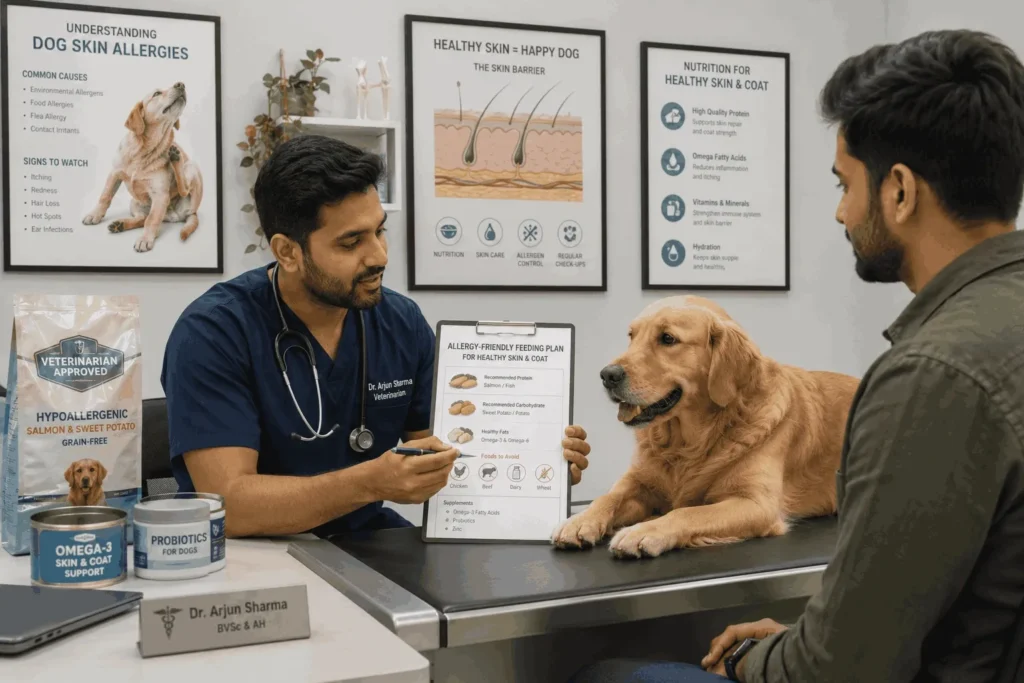
Diagnosing food allergies isn’t as simple as running a single blood test.
In fact, there is currently no reliable blood or saliva test that can definitively diagnose canine food allergies. Veterinary dermatologists generally consider a carefully conducted elimination diet followed by a food challenge to be the most dependable method.
Typical Diagnostic Process
| Step | Purpose |
|---|---|
| Medical history | Reviews when symptoms started, previous diets, flea control, and environmental exposures. |
| Physical examination | Looks for signs of skin infections, parasites, ear disease, and other underlying conditions. |
| Skin tests | May include skin scrapings or cytology to identify mites, bacteria, or yeast. |
| Flea assessment | Rules out flea allergy dermatitis, one of the most common causes of itching. |
| Elimination diet trial | An 8–12 week diet using a prescription hydrolyzed protein or novel protein food with no other treats or table scraps. |
| Food challenge | Reintroducing previous foods under veterinary guidance to confirm whether symptoms return. |
In my experience: Many owners believe changing to another over-the-counter “sensitive skin” food is enough to diagnose a food allergy. Unfortunately, this often leads to confusion because multiple diets are tried without following a strict elimination protocol. Veterinarians generally recommend sticking to one prescribed diet consistently for the full trial period before deciding whether food is truly the cause.
Key Takeaways
A veterinary diagnosis is the fastest way to identify the underlying cause and avoid unnecessary diet changes.
Not every itchy dog has a food allergy.
Flea allergies and environmental allergies are often more common causes of persistent itching.
Food allergies usually require a structured elimination diet to diagnose accurately.
Secondary bacterial or yeast infections frequently develop alongside allergies and need separate treatment.
Treatment: What to Feed a Dog with Severe Skin Itchiness
Treating an itchy dog isn’t just about changing the food. The most successful treatment plan combines identifying the underlying cause, controlling inflammation, treating any skin infections, and improving the skin barrier.
Veterinarians generally recommend treating the current symptoms while also investigating what is causing them in the first place.
Step 1: Confirm Whether Food Is the Cause
Before changing your dog’s diet repeatedly, it’s important to determine whether food is actually responsible for the itching.
A veterinarian may recommend an 8–12 week elimination diet, which is currently considered the gold standard for diagnosing food allergies.
During this period:
- Feed only the prescribed diet.
- Avoid biscuits, treats, table scraps, and flavored medications unless approved by your veterinarian.
- Ensure every family member follows the same feeding plan.
- Monitor changes in your dog’s skin and itching.
Even a small amount of another food can interfere with the results.
Step 2: Choosing the Right Dog Food
Not every “sensitive skin” food is suitable for dogs with suspected food allergies.
What to Look For
| Type of Diet | When It Is Recommended | Advantages |
|---|---|---|
| Hydrolyzed Protein Diet | Confirming or managing food allergies | Proteins are broken into tiny fragments that are less likely to trigger an immune response. |
| Novel Protein Diet | Dogs that have never eaten the protein before | Helps identify whether common proteins are causing the allergy. |
| Limited Ingredient Diet | Mild food sensitivities (under veterinary guidance) | Fewer ingredients make it easier to identify possible triggers. |
| Omega-3 Enriched Diet | Dogs with chronic skin inflammation | Supports skin barrier health and may reduce inflammation over time. |
In my experience: Many owners keep switching between chicken, lamb, fish, and grain-free foods every couple of weeks. This rarely helps because the immune system needs time to respond, and constant diet changes make it difficult to identify the real trigger. Consistency is far more important than trying multiple brands.
Foods That May Trigger Allergies
Although every dog is different, veterinarians commonly identify these ingredients as potential allergens.
| Common Protein Triggers |
|---|
| Chicken |
| Beef |
| Dairy Products |
| Eggs |
| Soy |
| Wheat (less common than many owners believe) |
Remember, these ingredients are not harmful for most dogs. They only become a problem if an individual dog develops an allergy to them.
Can You Prepare Homemade Food?
Some owners prefer home-cooked meals during an elimination diet.
This should only be done under veterinary guidance, because homemade diets can easily become deficient in essential nutrients if fed long term.
A veterinarian or veterinary nutritionist can help formulate a balanced diet appropriate for your dog’s age, breed, weight, and medical condition.
Medical Treatment
Food alone usually isn’t enough if your dog already has severe inflammation or a secondary skin infection.
Depending on the diagnosis, your veterinarian may recommend:
| Treatment | Purpose |
|---|---|
| Anti-itch medication | Controls itching while the skin heals. |
| Antibiotics | Treats bacterial skin infections. |
| Antifungal medication | Controls yeast overgrowth. |
| Medicated shampoos | Removes allergens, bacteria, and excess oils from the skin. |
| Flea and tick prevention | Essential for dogs with flea allergy dermatitis. |
| Allergy injections or immunotherapy | May be recommended for environmental allergies in selected cases. |
Never give human antihistamines, steroid creams, or pain medications without veterinary advice, as some can be harmful to dogs.
Cost of Treating Dog Food Allergies in India
The cost varies depending on the severity of the condition, your location, and whether your dog requires long-term treatment.
Estimated Costs (India)
| Service | Approximate Cost (INR) |
|---|---|
| Veterinary consultation | ₹500–₹1,500 |
| Skin cytology or skin scraping | ₹500–₹2,000 |
| Prescription allergy diet (monthly) | ₹3,000–₹8,000+ |
| Medicated shampoo | ₹600–₹2,000 |
| Flea and tick prevention | ₹500–₹2,000 per month |
| Antibiotics or antifungal treatment | ₹800–₹3,000 |
| Follow-up consultation | ₹500–₹1,200 |
These are approximate estimates and may vary by city, clinic, and your dog’s size.
Home Care Tips for Itchy Dogs
While home care cannot cure a true food allergy, it can make your dog more comfortable and support recovery.
Safe Home Care Checklist
| Home Care Tip | Why It Helps |
|---|---|
| Wipe paws after walks | Removes pollen, dust, and environmental allergens. |
| Bathe with a veterinarian-recommended soothing shampoo | Helps reduce allergens and supports the skin barrier. |
| Keep flea prevention up to date | Prevents flea allergy flare-ups. |
| Use stainless steel or ceramic food bowls | Easier to clean and less likely to harbor bacteria than scratched plastic bowls. |
| Keep bedding clean | Reduces dust, dirt, and environmental allergens. |
| Store kibble correctly | Keep food in its original bag inside an airtight container in a cool, dry place. |
Avoid These Common Mistakes
- Switching dog food every week.
- Feeding leftover spicy food or curries.
- Giving milk because “it’s healthy.”
- Offering treats during an elimination diet.
- Stopping medication as soon as itching improves.
- Using home remedies like turmeric, coconut oil, or vinegar without veterinary advice.
In my experience: One of the biggest reasons dogs don’t improve is inconsistent feeding. Even a few biscuits or table scraps can interfere with an elimination diet and make it seem as though the food isn’t working.
Recovery Timeline
Every dog recovers at a different pace, depending on the cause of the itching and whether secondary infections are present.
| Time After Starting Treatment | What You May Notice |
|---|---|
| 1–2 weeks | Reduced inflammation and less scratching if infections are controlled. |
| 3–6 weeks | Skin begins to heal and new hair growth may start. |
| 8–12 weeks | Full evaluation of an elimination diet. Many food-allergic dogs show clear improvement by this stage. |
| Several months | Continued skin and coat improvement with consistent management. |
Recovery may take longer if your dog has multiple allergies or chronic skin disease.
Prevention
Although not every allergy can be prevented, good skin care and nutrition can reduce flare-ups and help maintain healthy skin.
Prevention Checklist
- Maintain year-round flea and tick prevention.
- Feed a complete and balanced diet appropriate for your dog’s life stage.
- Avoid unnecessary food changes.
- Introduce new foods gradually.
- Store kibble properly to maintain freshness.
- Bathe using veterinarian-recommended shampoos when advised.
- Keep your dog’s ears, paws, and skin folds clean and dry.
- Schedule regular veterinary check-ups, especially if skin problems keep returning.
Preventive care is often more effective, and less expensive, than repeatedly treating severe skin infections.
Frequently Asked Questions
Yes. Chicken is one of the proteins that can trigger food allergies in some dogs. However, it is also one of the most commonly fed proteins, so not every itchy dog is allergic to chicken. A proper elimination diet is needed to confirm the cause.
The best food depends on the underlying diagnosis. Veterinarians generally recommend a prescription hydrolyzed protein diet or a carefully selected novel protein diet when a food allergy is suspected.
Most elimination diet trials last 8–12 weeks. Some dogs improve sooner, but stopping the trial early may lead to an inaccurate diagnosis.
No. Homemade food does not cure allergies. It may be used as part of a veterinarian-guided elimination diet, but it must be nutritionally balanced for long-term feeding.
Not necessarily. Itching can also be caused by fleas, environmental allergies, mites, bacterial infections, or yeast infections. A veterinary examination can help identify the underlying cause before making major dietary changes.
Yes. Recurrent ear infections are one of the most common signs of food allergies in dogs, especially when they occur alongside itchy skin and paw licking.
When should I see a veterinarian?
Book a veterinary appointment if your dog:
- Scratches constantly for more than a few days.
- Develops repeated ear infections.
- Has open sores, pus, or a bad skin odor.
- Loses significant amounts of hair.
- Doesn’t improve despite home care.
Seek emergency veterinary care immediately if your dog has difficulty breathing, severe facial swelling, collapses, or develops extensive skin wounds.
Conclusion
Severe skin itchiness can be frustrating for both dogs and their owners, but the solution isn’t always as simple as changing dog food. Food allergies are just one possible cause, and many itchy dogs actually suffer from flea allergies, environmental allergies, skin infections, or a combination of these conditions.
The key to successful treatment is identifying the underlying cause rather than guessing. A structured elimination diet, combined with a thorough veterinary examination, remains the most reliable way to diagnose food allergies. Once the trigger is identified, consistent nutrition, appropriate medication when needed, and good skin care can help most dogs live comfortably with far fewer flare-ups.
From my experience: The dogs that recover best are usually those whose owners stay patient and consistent. Avoid changing diets every few weeks, follow your veterinarian’s recommendations carefully, and give the treatment plan enough time to work. Small, consistent steps almost always lead to better long-term results than constantly trying new foods or home remedies.